Perspectivas sobre aplicaciones e innovaciones de cadenas industriales
Estándar transmisión de potencia los componentes deben seguir explícitamente las normas ANSI cadena de rodillos dimensiones para garantizar la intercambiabilidad entre diferentes maquinarias mecánicas. La elección precisa de los componentes evita el desgaste prematuro del equipo y garantiza una eficiencia operativa óptima bajo cargas pesadas.
Esta guía proporciona un desglose completo de los tamaños de componentes estándar para ayudar a los ingenieros a seleccionar el hardware de transmisión de potencia correcto.
¿Cuáles son las métricas principales de Dimensiones de la cadena de rodillos ANSI?
La norma ANSI B29.1 establecida por el Instituto Nacional Estadounidense de Estándares (ANSI) define requisitos dimensionales estrictos para los componentes de transmisión de potencia.
La norma especifica tres mediciones críticas:
- Paso (P): La distancia entre los centros de dos pasadores de eslabón consecutivos.
- Diámetro del rodillo (D): El diámetro exterior del rodillo de la cadena.
- Ancho del rodillo (W): El espacio entre las placas del eslabón interior, que debe coincidir con el ancho del diente del piñón.
- Diámetro del pasador y longitud del pasador: Grosor del pasador y ancho total de la cadena a través de los pasadores.
Lectura del número de cadena
- Dígitos a la izquierda del último dígito: Paso en incrementos de 1/8 de pulgada (por ejemplo, una cadena #40 tiene un paso de 4/8 de pulgada, una cadena #80 tiene un paso de 8/8 de pulgada o 1 pulgada).
- Último dígito: 0 para cadena estándar, 1 para ligera y 5 para sin rodillo.
- Sufijos: -2 para dúplex (doble hilera), -3 para triplex (triple hilera) y H para la serie de alta resistencia.
Comunes ANSI Tabla de tamaños de cadenas de rodillos
A continuación se muestran las dimensiones de las cadenas de una sola hilera estándar de uso más frecuente:
| Tamaño de la cadena | Paso (P) en pulgadas | Ancho del rodillo (W) en pulgadas | Diámetro del rodillo (D) en pulgadas | Diámetro del pasador (E) en pulgadas | Resistencia última promedio (lbs) |
| #25 | 0.250 | 0.125 | 0.130 | 0.091 | 930 |
| #35 | 0.375 | 0.188 | 0.200 | 0.141 | 2,320 |
| #40 | 0.500 | 0.312 | 0.312 | 0.156 | 3,970 |
| #41 | 0.500 | 0.250 | 0.306 | 0.141 | 2,760 |
| #50 | 0.625 | 0.375 | 0.400 | 0.200 | 6,620 |
| #60 | 0.750 | 0.500 | 0.469 | 0.234 | 9,270 |
| #80 | 1.000 | 0.625 | 0.625 | 0.312 | 16,540 |
| #100 | 1.250 | 0.750 | 0.750 | 0.375 | 25,360 |
| #120 | 1.500 | 1.000 | 0.875 | 0.437 | 32,640 |
| #140 | 1.750 | 1.000 | 1.000 | 0.500 | 45,210 |
| #160 | 2.000 | 1.250 | 1.125 | 0.563 | 57,780 |
¿Cómo se lee una tabla de tamaños de cadenas de rodillos estándar?
Una tabla estándar de dimensiones de cadenas de rodillos ANSI organiza las dimensiones por designaciones de tamaño estándar desde el tamaño 25 hasta el tamaño 160. La tabla ayuda a los técnicos de mantenimiento a identificar rápidamente las piezas de repuesto sin cálculos fraccionarios manuales.
La estandarización de estas tablas garantiza que las piezas de diferentes fabricantes se ajusten a los mismos piñones sin interferencias mecánicas. Puede descargar un pdf de dimensiones de cadenas de rodillos ANSI para referencia sin conexión en los talleres.
Para el diseño de aplicaciones internacionales, los ingenieros a menudo requieren mediciones métricas en lugar de unidades fraccionarias en pulgadas. Una tabla de tamaños de cadenas de rodillos en mm convierte estas dimensiones estándar en valores exactos en milímetros para la compatibilidad global.
Por ejemplo, un componente de tamaño 40 se convierte a un paso de exactamente 12,70 milímetros. Esta traducción precisa evita errores de ensamblaje al acoplar componentes estadounidenses con maquinaria europea.
¿Cómo ayuda una tabla de tamaños de cadenas industriales en el mantenimiento de maquinaria?
Una tabla de tamaños de cadenas industriales actúa como una herramienta principal de solución de problemas para los equipos de mantenimiento de plantas de fábrica. También ayuda en el mantenimiento de maquinaria al proporcionar datos dimensionales precisos necesarios para verificar la compatibilidad de la cadena y el piñón, prevenir el desgaste prematuro y mantener un funcionamiento fiable.
Cuando se rompe un componente de transmisión, los técnicos utilizan calibradores para medir el paso y el ancho del rodillo. Comparan estas mediciones físicas brutas con la tabla de tamaños de cadenas de rodillos ANSI para encontrar el número de reemplazo correcto. Este proceso elimina las conjeturas y reduce el costoso tiempo de inactividad de la fábrica durante las situaciones de mantenimiento de emergencia.
Por ejemplo, las dimensiones de una cadena de rodillos de tamaño 40 tienen medidas estandarizadas para el paso, el diámetro del rodillo, el ancho interno y el diámetro del pasador. Estos permiten a los técnicos inspeccionar los componentes según los requisitos de las especificaciones. Dimensiones incorrectas pueden hacer que el componente se monte sobre los dientes del piñón, lo que resulta en una falla rápida del sistema.
Los técnicos pueden utilizar un pdf de tabla de tamaños de cadenas de rodillos para verificar las tolerancias de espacio libre dentro de las carcasas compactas de las máquinas. Estas tolerancias ajustadas mantienen la retención adecuada de lubricación durante largos ciclos de funcionamiento.
¿Qué normas técnicas se deben considerar?
La adhesión a las especificaciones técnicas garantiza la seguridad en el entorno peligroso de entornos industriales de alto par. La especificación ANSI B29.1 establece no solo las dimensiones, sino también las resistencias últimas mínimas a la tracción para cada una.
Es importante que los componentes puedan soportar un límite de carga certificado para que no se produzca una falla catastrófica por rotura en caso de cargas pico inesperadas.
Fabricante de cadenas industriales y de rodillos
Explore nuestro catálogo completo de cadenas industriales y de rodillos de alta resistencia. Diseñadas para transmisión de potencia de alta resistencia, máxima durabilidad y resistencia superior al desgaste en diversas aplicaciones.
Ver todos los productos de cadenaConclusión
Las dimensiones estándar de las cadenas de rodillos ANSI ayudan a prevenir errores mecánicos al garantizar la compatibilidad adecuada de la cadena y el piñón. El cumplimiento de las normas ANSI B29.1 e ISO 606 promueve una transmisión de potencia fiable, una reducción del desgaste y un rendimiento constante en entornos industriales exigentes.
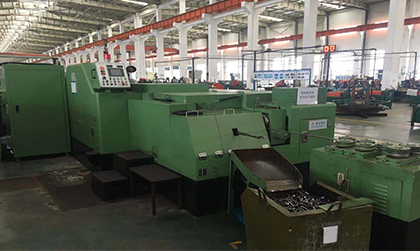
Cadena Universal cumple con estas métricas de certificación mediante la utilización de aplicaciones de fabricación flujos de trabajo y una infraestructura de producción eficaz. Nuestra instalación opera prensas de estampado automatizadas de alta precisión, máquinas de laminación y hornos de tratamiento térmico controlados para asegurar dimensiones físicas exactas.
El entorno de producción controlado de Universal Chain elimina las variaciones estructurales, lo que permite a la fábrica entregar componentes consistentes para aplicaciones industriales globales complejas. Por favor Contáctenos hoy para recibir una cotización técnica para las dimensiones de su maquinaria industrial específica.