Short pitch precision roller chain (A series)
Short pitch precision roller chain designed for stable power transmission in industrial drive systems.
View More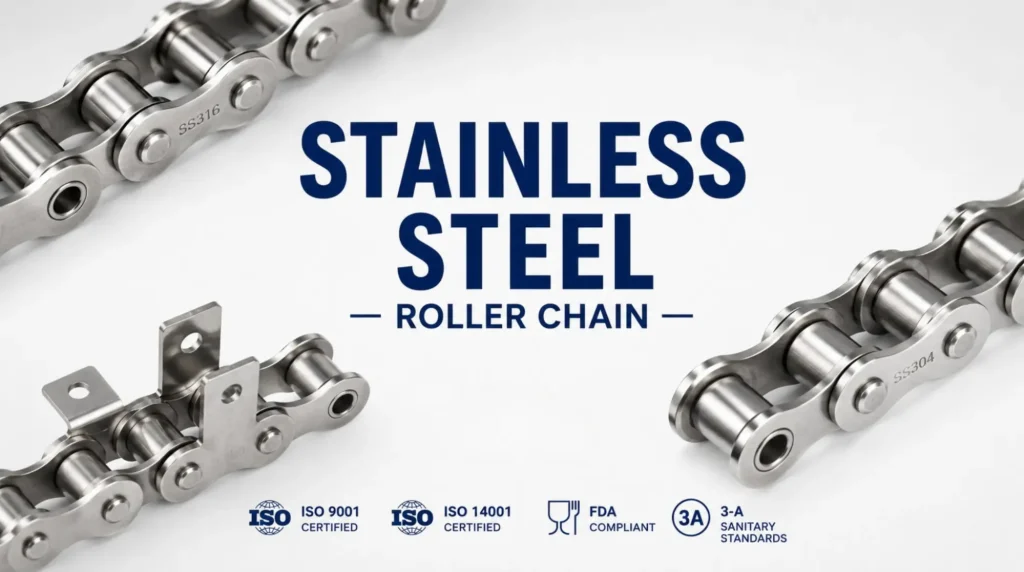
https://www.universalchain.net/product/stainless-steel-chain
A stainless steel roller chain operates reliably in corrosive environments, hot ovens, and cryogenic freezing lines. Grades 304 and 316 are among the most common types, which have resistance against corrosion and comply with all FDA, USDA, and 3-A Sanitary Standards for applications where the chain makes direct contact with food items.
Universal Chain produces stainless steel chains which are certified to ISO 9001, ISO 14001, and API standards. Our products support over 10,000 industrial clients across global food processing networks through rigorous metallurgical testing.
Choose stainless steel chains because they form an oxidizing layer of chromium oxide that prevents oxidation and corrosion.
In choosing drives’ elements, one must consider issues such as chemical exposure, heat and mechanical loading. Carbon steel deteriorates rather quickly in humid or washdown conditions due to pin oxidation and elongation.
The passive layer automatically regenerates after scratching by the mechanical load. Standard stainless steel chains retain their mechanical properties at extremely low or high temperatures, from -40°F to 752°F (-40°C to 400°C). In chemical, pharmaceutical, and food plants, this material is used due to its cleanliness.
In choosing such chains, engineers ensure no rust peeling occurs near the open product stream. The surface is not subject to bacterial adhesion and makes washing easier. Understanding these properties helps plant managers protect sensitive processing equipment.
Selecting 304 vs 316 stainless chain options depends directly on exposure to harsh sanitizing chemicals. The chemical composition determines corrosion resistance and mechanical strength under harsh working conditions.
In Grade 304, 18% of chromium and 8% of nickel provide an average protection against water and mild acids. Grade 316 adds 2% to 3% molybdenum, which enhances resistance to chlorides, salt spray, and aggressive organic chemicals.
| Property | Grade 304 Stainless Steel | Grade 316 Stainless Steel |
| Chromium Content | 18% – 20% | 16% – 18% |
| Nickel Content | 8% – 10.5% | 10% – 14% |
| Molybdenum Content | None | 2% – 3% |
| Pitting Resistance (PREN) | ~19 | ~23-25 |
| Best Environment | Fresh water, mild detergents | Chlorides, saltwater, strong acids |
To accommodate unique applications that may need non-magnetic materials or greater tensile strength, alloy metals such as the 310 or 600 series martensitic steels can be used. Learn more about the properties of materials in the Universal Chain’s guide to roller chain materials.
Stainless steel chains meet food industry compliance standards because they provide a a non-porous surface which does not allow food particles or bacteria to lodge in the chain parts.
Food processing plants are strictly regulated to ensure their food items remain uncontaminated to avoid any risk of food-borne diseases. All equipment should meet the standards set by the FDA, USDA, and 3-A sanitary standards.
To achieve compliance, smooth pin surfaces, crevice-free bushing connections, and safe lubrication are required. There is the risk of contaminating the food items using unapproved food grade conveyor chains due to metal filings and toxic grease spills. Certified chains do not contain metal ions that might leach into raw food items after treatment with chemical sanitizers.
| Food Industry Standards | Roles |
| FDA Title 21 CFR 177.2600 | Direct Food Contact Materials Compliance |
| USDA Equipment Guidelines | Smooth Surfaces Free of Pits and Crevices |
| 3-A Sanitary Standards | Easy Cleanability and Drainage Verification |
Stainless steel chains do not develop pits on its surface and maintain its structural strength under clean-in-place (CIP) washdowns. Therefore, they are widely used in sanitation methods for beverage and meat processing facilities that use caustic soda, nitric acid, and chlorine. All of these remove the oil protection layers and induce stress corrosion in regular carbon steel.
Water pressure up to 1,000 PSI removes dirt from roads, organic oils, and chemical contaminants without removing protective layers. Zinc plating and nickel coating may peel off because of mechanical wear, exposing the underlying steel to immediate oxidation. Meanwhile, stainless steel possesses inherent corrosion resistance in all parts of each link component.
In cases when there is high moisture but no acids present in the environment, plant managers may consider using coated chains. For more information, see the company’s comparison of zinc-plated and galvanized roller chains.
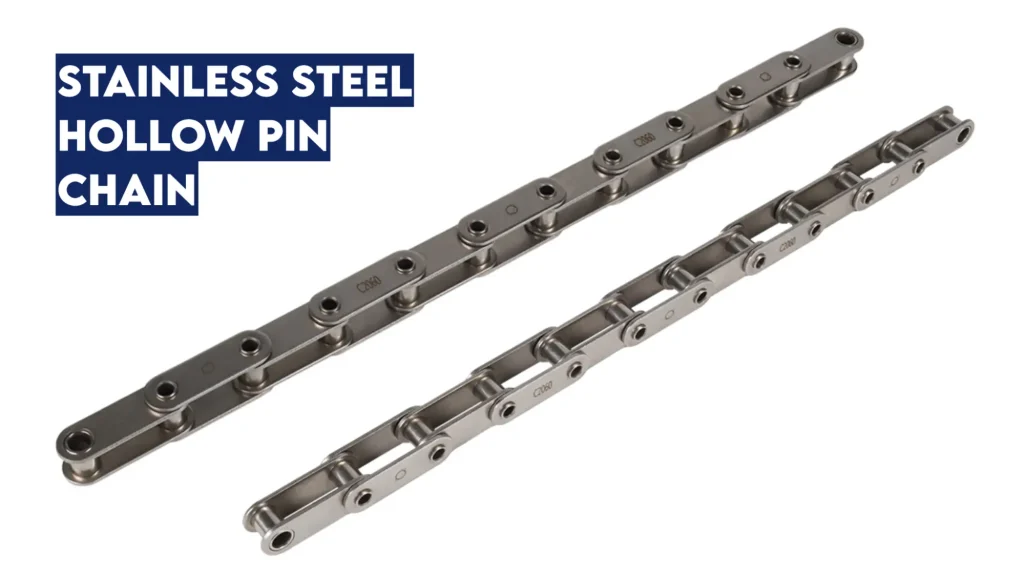
Although carbon steel is less expensive in terms of initial cost, it needs lubrication and must be replaced more often due to being used in humid conditions. The analysis of stainless steel vs carbon steel roller chain can be made on the basis of maintenance, labor, and downtime costs through the entire lifespan of the machinery.
| Cost Factor | Carbon Steel | Stainless Steel |
| Initial Purchase Cost | Low upfront expense | Higher initial investment |
| 3-Year Total Cost | Higher due to frequent replacement | Lower long-term cost |
| Performance in Wet Environments | Higher maintenance due to rust | Better corrosion resistance |
| Operational Lifespan | Shorter | Longer |
| Best For | Low-cost, short-term applications | Wet environments and long-term use |
The initial cost of stainless steel is higher, but in the span of 12 to 18 months of continued production, the cost of stainless steel becomes less. In short, reduced downtime and fewer replacements make stainless steel the economical choice for high-volume manufacturing lines.
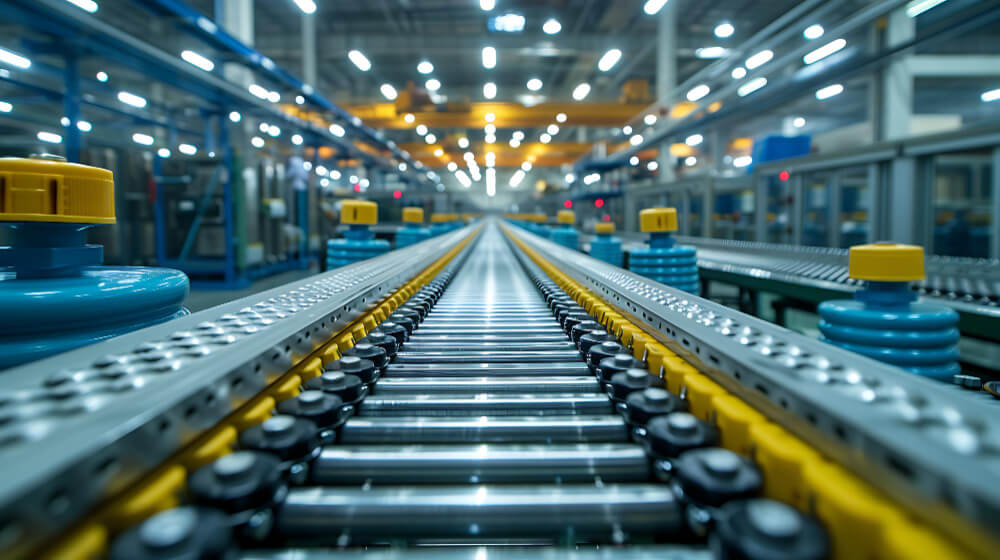
Using a stainless steel roller chain applications food industry prevents drive failures caused by severe thermal expansion or cold embrittlement. Conveyor systems transport raw materials through cooking ovens, freezing tunnels, sorting conveyors, and packing conveyors.
For industrial baking applications, stainless steel chains convey dough sheets in proofers operating at 90% relative humidity as well as baking ovens that exceed 500°F (260°C). Ductility and tensile strength of austenitic stainless steel remain unaffected by cyclic temperature changes, thus preventing breakage of brittle chain links.
Cryogenic freezers use special stainless steels in order to withstand low temperature effects down to -100°F (-73°C). Stainless steel chain links bend easily while following sprockets and do not bind and/or flake off. Find more conveyor chain applications in Universal Chain’s conveyor chain uses guide.
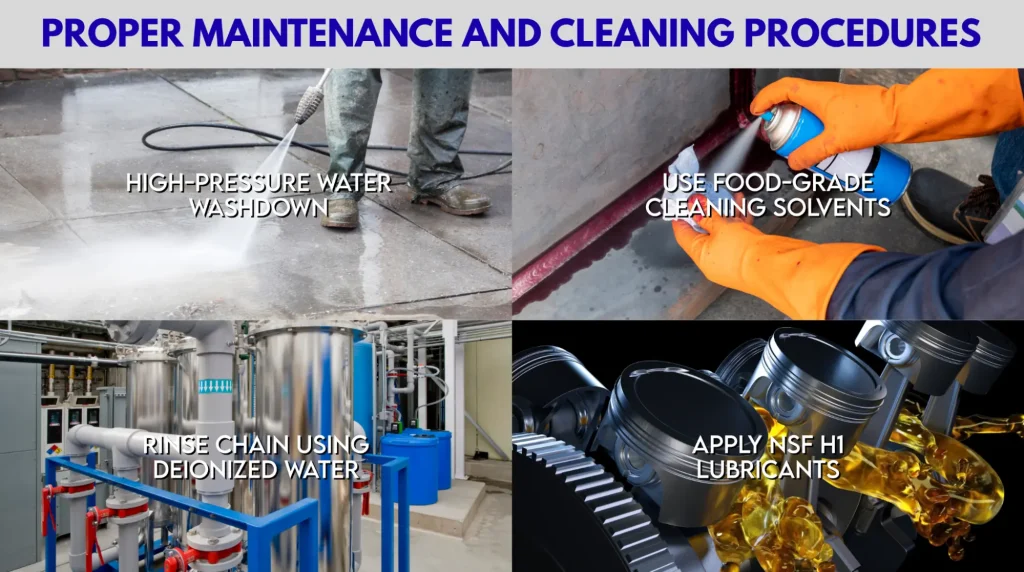
Below are the ways to properly maintain and clean stainless chains to ensure longevity and eliminate early pin-bushing wear.
Raw material source, dimensional accuracy, and manufacturing certification must be verified when sourcing industrial chain drive parts. Consult the Material Test Reports (MTR) to ensure you get the real chemical content of the chain.
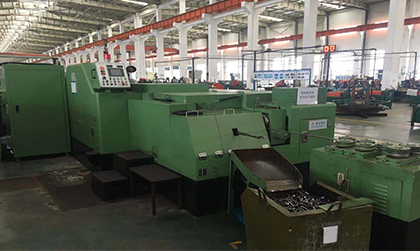
Choose suppliers who conduct strict inspections through tests such as tensile tests, salt spray tests, and ultrasonic inspection of the components. Sourcing from reputable manufacturers will provide you with chains with accurate pitch dimensions and good articulation. Review the manufacturing credentials at Universal Chain to verify technical production capabilities.
Short pitch precision roller chain designed for stable power transmission in industrial drive systems.
View More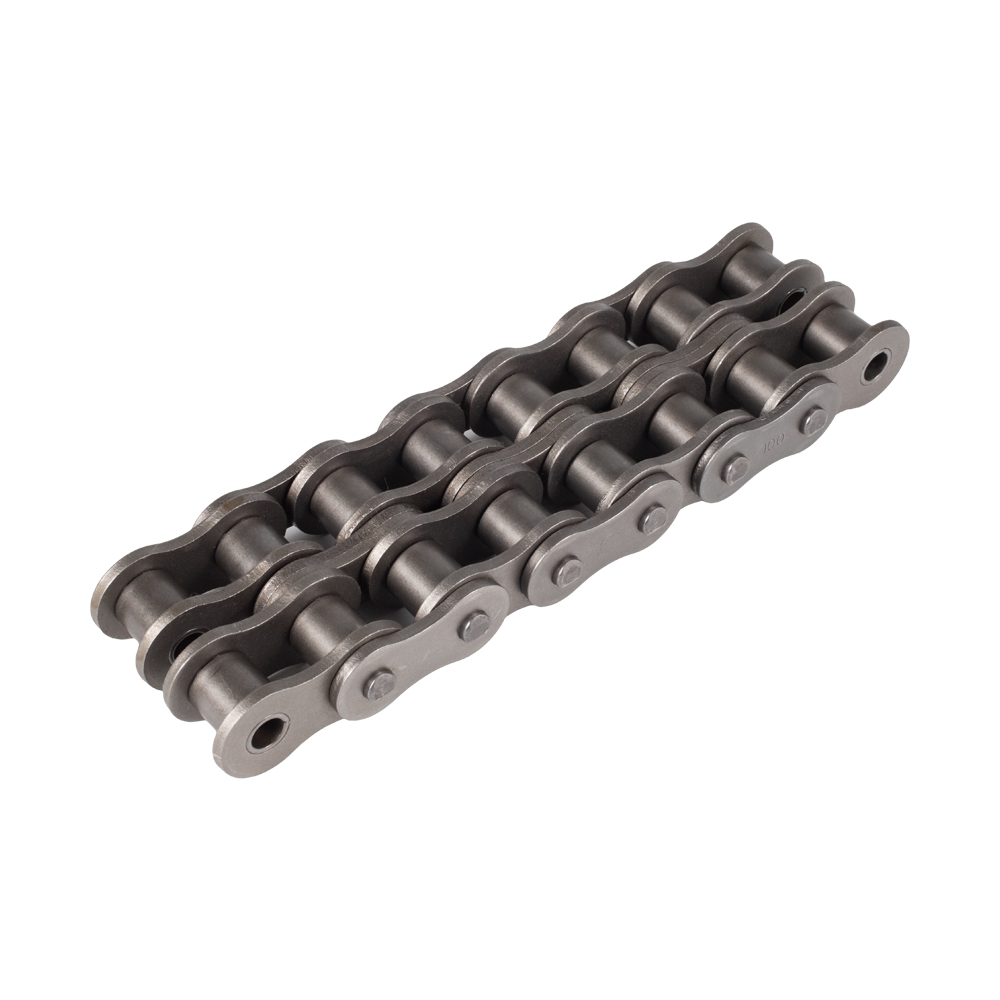
AI DETECTION (used app: https://copyleaks.com/ai-detector)
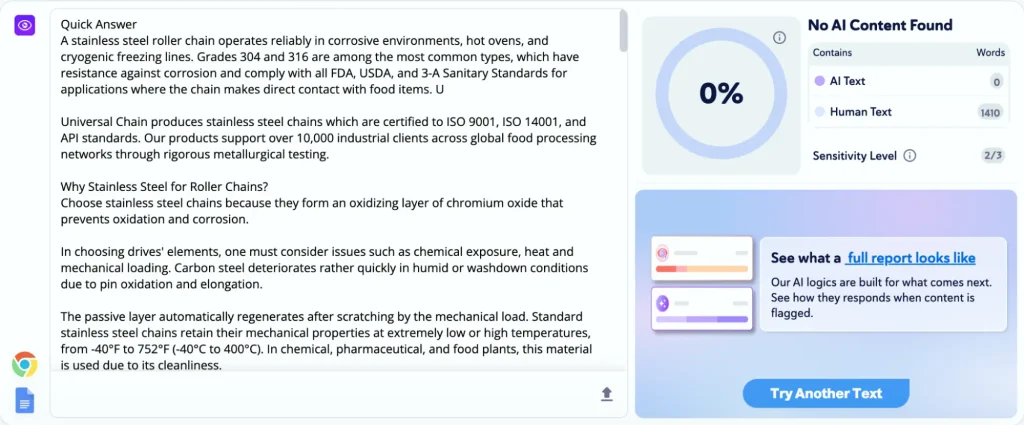
AI DETECTION (used app: https://gptzero.me/)

B2B CHECKER JUSTIFICATIONS (to debunk the validity of score)

✅ Both the primary and secondary keywords are present.
✅ Global standards and factory capabilities were mentioned in the article.
✅ No sentences exceed the 20-22 words. Take note that the GDocs word counter does not match with the B2B checker.
✅ The content, every after the headings, were written in NLP format.
✅ Photos were present as well.
PEOPLE ALSO ASK FOR FAQs