Roller Chain Working Load vs. Tensile Strength
Quick Answer: Roller chain working load is the permitted operating load for a defined application, while tensile strength is the load at which a chain specimen fails in tension. Do not treat that breaking figure as a running load or apply a universal safety factor. The first decision is to compare the model-specific allowable load, duty, fatigue and joining hardware. Universal Chains covers standard, high-strength and application-specific roller chains, so its team can review these details against the proposed model.
This guide helps buyers interpret both figures and ask every supplier for evidence on the same basis.
What is roller chain working load compared with tensile strength?
Roller chain working load is the load a chain may carry in operation under the conditions covered by the supplier’s rating. It is sometimes called allowable load. The label does not create a universal formula; it tells the buyer to ask what operating duty the figure covers.
Tensile strength, or breaking load, describes the result of pulling a chain until failure. Suppliers may report minimum, average or maximum tensile strength, so even that figure needs a clear definition. USA Roller Chain explains these test measures.
| Measure | What it answers | Buyer’s use |
|---|---|---|
| Roller chain working load | What load may the chain carry under the stated operating conditions? | Compare it with the calculated or observed duty for the same model and use. |
| Tensile strength | What pull can the assembly withstand in a tensile or breaking test? | Verify the product threshold and qualify strength claims. Do not use it as a running-load allowance. |
Two quotations can show different tensile figures and no roller chain working load basis. That makes a price comparison unreliable. Universal’s older roller-chain guide also separates tensile strength, working load and fatigue.
Why is tensile strength not a safe roller chain working load?
A chain does more than receive one smooth pull. Link plates, pins, bushings and rollers meet changing loads as the chain engages the sprockets. Starts, stops, jams and shock add further variation. Tsubaki’s roller-chain introduction notes that the link plate carries repeated tension and sometimes shock, so static strength alone does not describe its working duty.
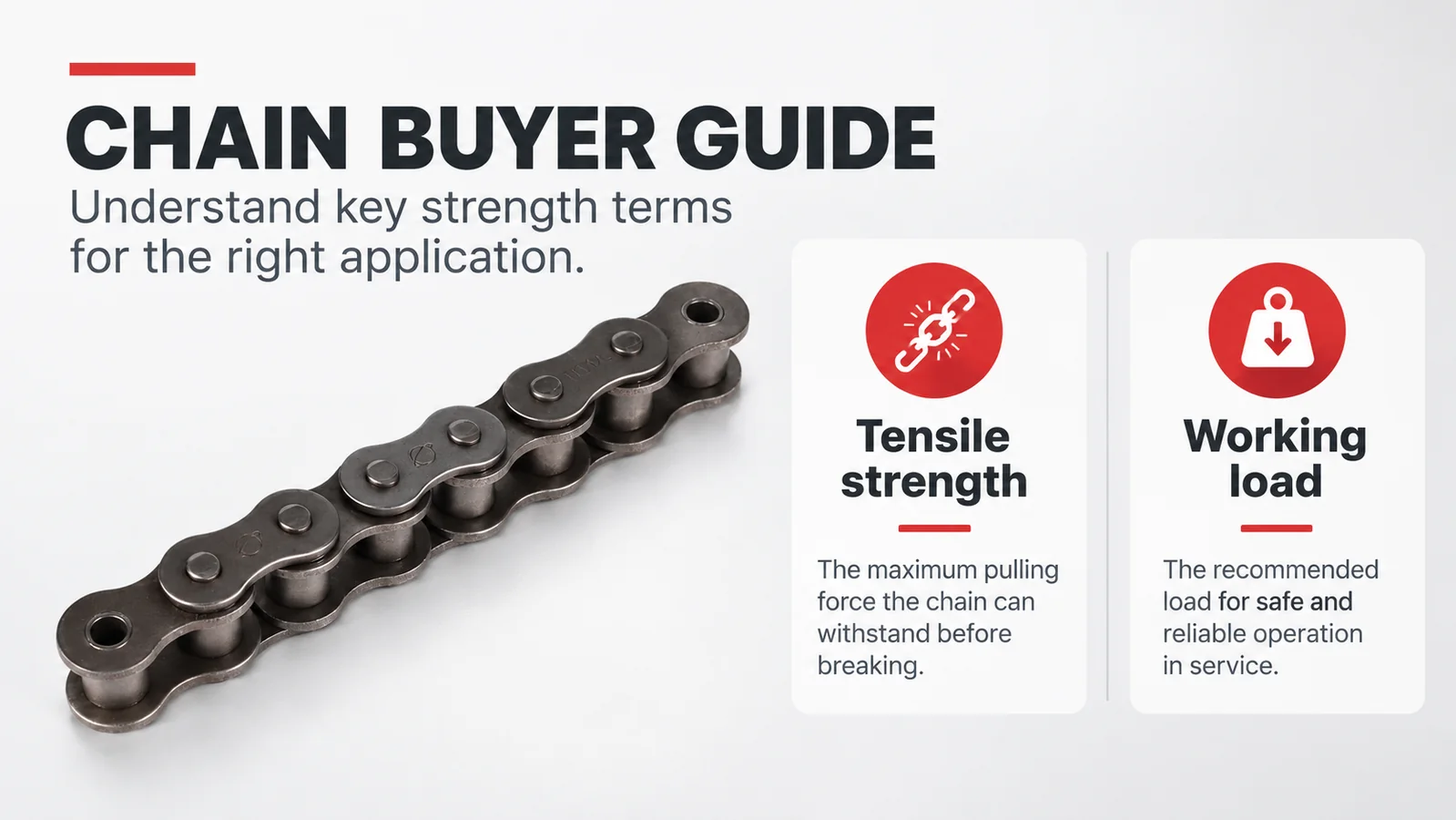
A chain may survive a high one-time pull and still have a much lower sustainable limit. Diamond’s chain guide states that working-load capacity and ultimate tensile strength do not have a consistent relationship. Fatigue is damage from repeated load cycles, which is why it belongs in the selection review.
Published conversion advice is inconsistent. Some supplier content suggests a ratio; another source states a percentage of tensile strength. Those examples show why copying a number from a blog into an RFQ is risky. Ask the manufacturer to state the roller chain working load and rating method for the exact model.
Before comparing ratings, identify the chain correctly. Pitch, roller diameter and inner width are the basic fit dimensions. Universal’s ANSI dimensions guide explains the measurements, while its ANSI chain overview helps with A-series terminology.
What operating conditions change roller chain working load?
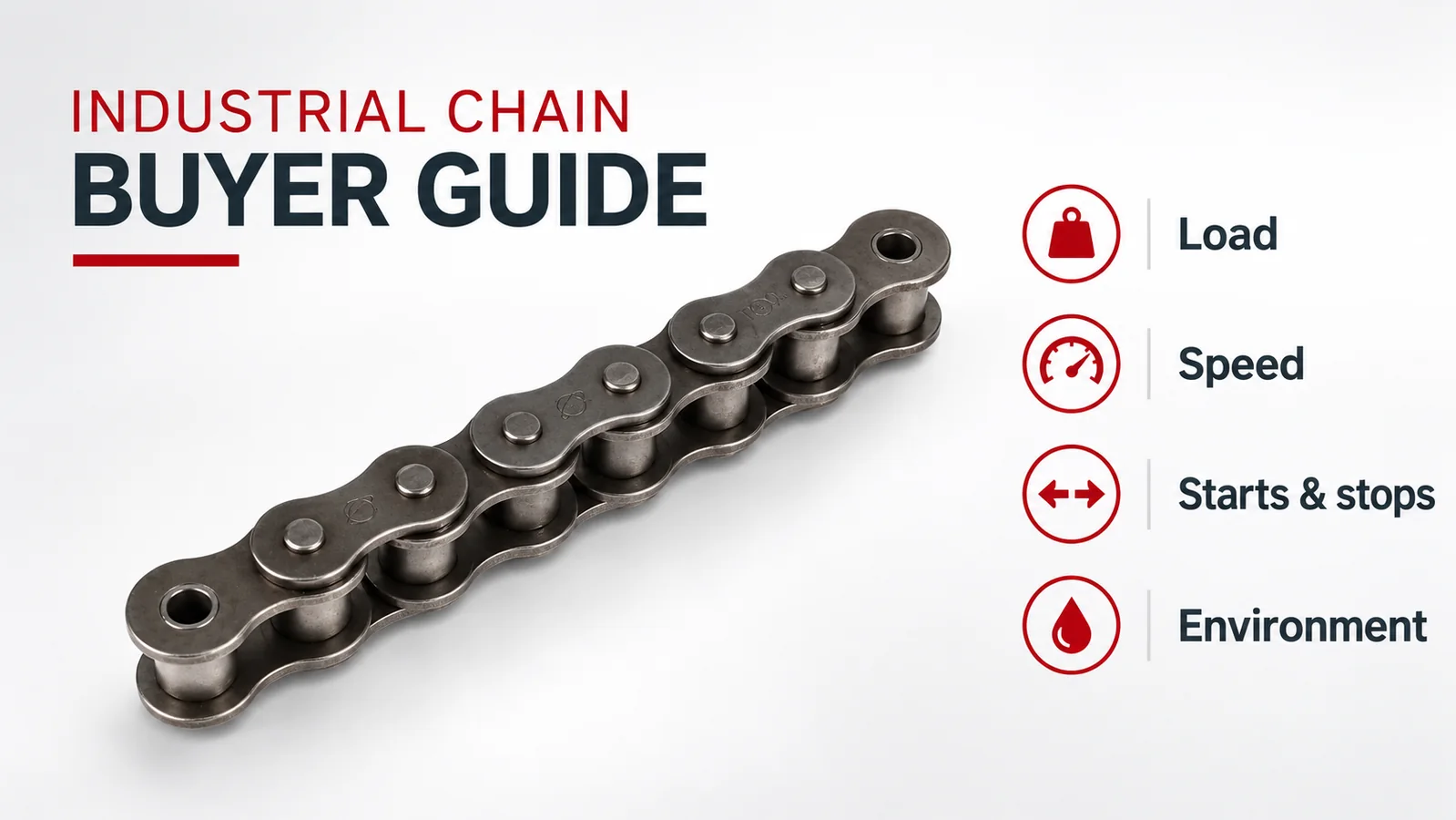
The rating is useful only when its assumptions resemble the machine’s operation. A chain suited to a steady conveyor may fail early on a frequently reversing drive. Describe the actual load path rather than motor power or product weight alone.
| Operating detail | What to provide | Why it matters |
|---|---|---|
| Starts, stops and shock | Frequency, reversal, jam risk and likely impact | A sudden or repeated pull can exceed the average running load. |
| Speed and duty cycle | Speed, hours per shift and cycle pattern | Frequent engagement increases the number of load cycles. |
| Alignment and sprockets | Shaft positions, sprocket drawings and tooth condition | Misalignment and worn teeth can increase load and wear. |
| Lubrication and wear | Method, inspection interval and measured elongation | Poor lubrication or a worn chain changes contact conditions and remaining serviceability. |
| Environment | Temperature, moisture, dust, washdown and chemicals | The conditions may require a different material or maintenance plan. |
Use the installation and maintenance guide when checking alignment, tension, lubrication and wear. The equipment maker’s instructions still govern the machine.
Does speed or duty cycle alter roller chain working load?
Yes. Speed and duty cycle change how often the chain engages and releases the sprocket teeth. Rapid cycling makes fatigue and wear more important. If the proposed construction uses multiple strands, confirm the configuration rather than treating it as a direct single-strand substitute. Universal’s single-strand versus multi-strand guide explains the difference.
For a new drive or conveyor, the drive-chain range is a useful place to compare families. A stable low-speed duty may leave more room for a standard construction. A demanding duty may justify a stronger or more wear-resistant option, provided its model-level rating supports that choice.
Does higher tensile strength mean a higher roller chain working load?
Not automatically. Strength, fatigue resistance and wear resistance are related but distinct. A higher tensile figure may not produce a proportional allowable-load increase. It may not lengthen service life if poor lubrication, worn sprockets or the environment controls the failure.
Universal reports a scoped example on its high-strength T-series product page: tensile strength more than 30% above the stated ISO minimum reference and fatigue strength more than 60% above the stated ISO reference. Those claims apply to the named series and comparison basis. They do not establish the roller chain working load of every model, an equal gain across all Universal chains or a guaranteed service life.
Use the high-strength short-pitch range to compare options. Keep the standard short-pitch A-series chain as the baseline when it is already specified. Ask which measurement improved, against what reference and for which model.
Can connecting or offset links reduce roller chain working load?
Yes, the assembly rating may be lower than the base chain. Connecting hardware and any offset link belong in the capacity review. If an odd pitch count requires a one-pitch offset link, check whether it carries the same allowable load and fatigue strength as the rest of the chain.
Tsubaki’s introduction describes a one-pitch offset link with 65% of the base chain’s maximum allowable load and fatigue strength 35% lower than the base chain. Those percentages belong to Tsubaki’s stated product context. Do not assume they apply to Universal or another maker. Universal’s offset-link guide explains the odd-link situation; confirm the proposed joining part separately.
Where the layout permits, use an even pitch count to avoid an offset link. Whatever the design, ask for the joining hardware, pin retention method and roller chain working load confirmation for the complete assembly.
How should buyers compare roller chain working load claims?
Use one sequence for every quote:
- Identify the family, size, standard and complete model. The roller-chain size chart provides a starting point.
- Describe the load path, speed, starts, stops, duty cycle and environment.
- Request the model-specific roller chain working load and its rating basis.
- Confirm sprockets, strand count, joining hardware and attachment loads.
- Make the quotation list the model, quantity, documents and stated exceptions.
| Weak request | Stronger buyer request |
|---|---|
| “Send your strongest #60 chain.” | “For this drive, confirm the proposed model’s allowable load under the attached speed, shock and duty schedule.” |
| “What is the tensile strength?” | “State tensile strength and roller chain working load separately, with the test or rating basis.” |
| “This replaces the old chain.” | “Review the drawings, complete assembly, joining hardware and any fit exceptions.” |
The precision roller-chain category helps narrow the family, while the broader roller-chain product page helps when the existing specification is unclear.
What belongs in a roller chain working load RFQ?
Send the machine model, chain number or drawing, confirmed dimensions, strand count and sprocket details. Add the load path, speed, starts and stops, shock or jam conditions, duty cycle, environment and maintenance access.
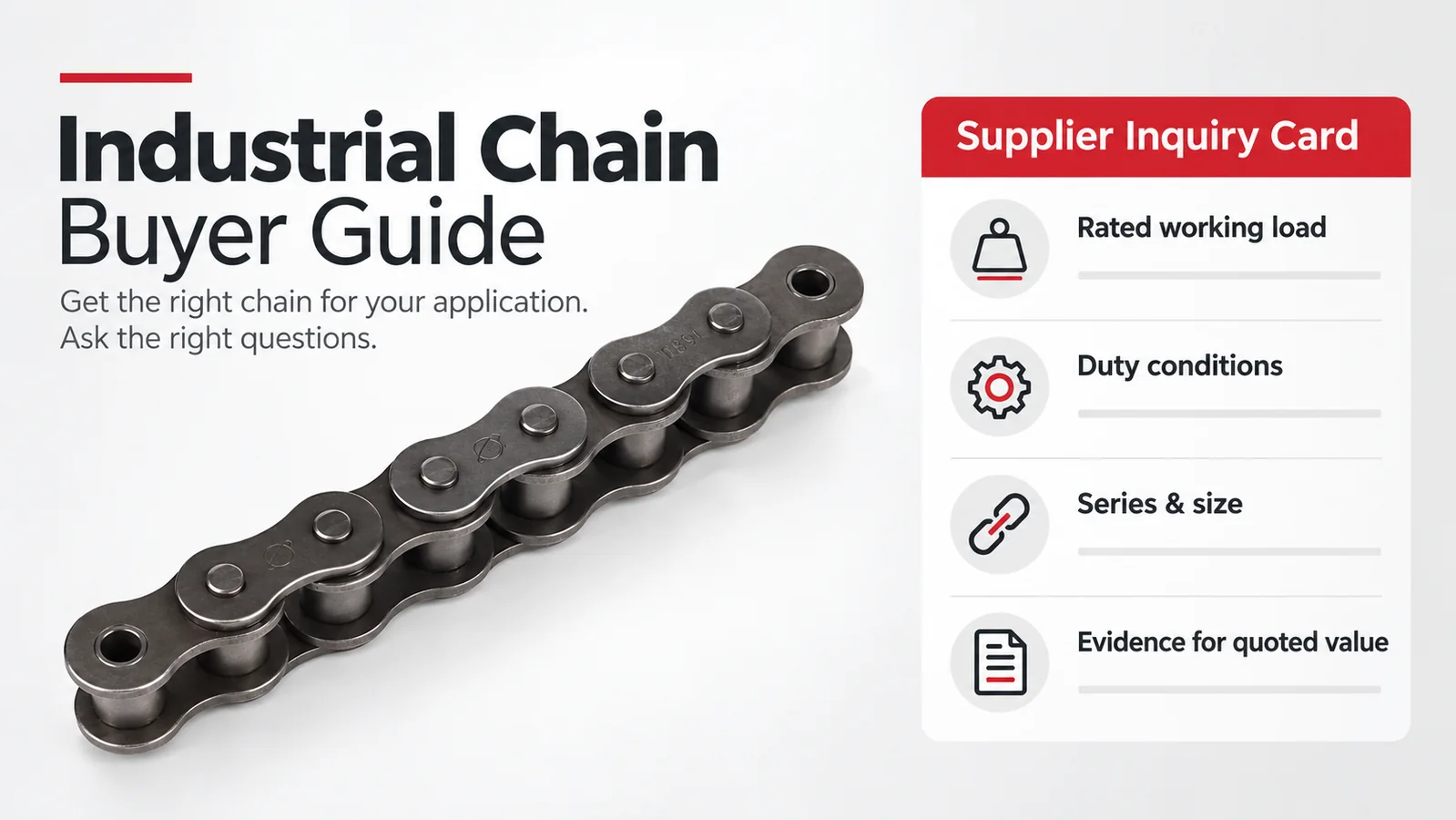
Include the pitch count, joining arrangement, quantity and required date. State the documents you need, such as a dimensioned drawing, model-level rating, inspection record or test report. Ask every supplier to list assumptions and deviations instead of presenting a clean rating without context.
Attachments need a broader load review because fixture weight and position affect the duty. Universal’s attachment-chain overview is a useful follow-up. If the existing chain belongs to another pitch family, compare the double-pitch transmission chain range as a separate specification.
Compare quotations on the same drawing revision, duty assumptions and documents. A low chain price means little if one supplier excludes joining parts, assumes a lighter duty or leaves sprocket fit unresolved. Universal has manufactured chains since 1970, according to the company, and offers standard, high-strength and application-specific families. The practical advantage is access to a range and a review that starts with the model and duty, not a generic strength claim.
What is the practical answer on roller chain working load?
Use tensile strength to understand a test threshold and verify a product claim. Use documented roller chain working load for the defined duty, then confirm fatigue, wear, sprockets and the complete assembly before comparing price.
Send the machine model, chain number or drawing, duty details and quantity to Universal Chains for fit and rating review. Ask the team to identify the proposed model and list any unanswered load, sprocket or joining-hardware point.