Conveyor System Trends 2026 for Manufacturers and Engineers
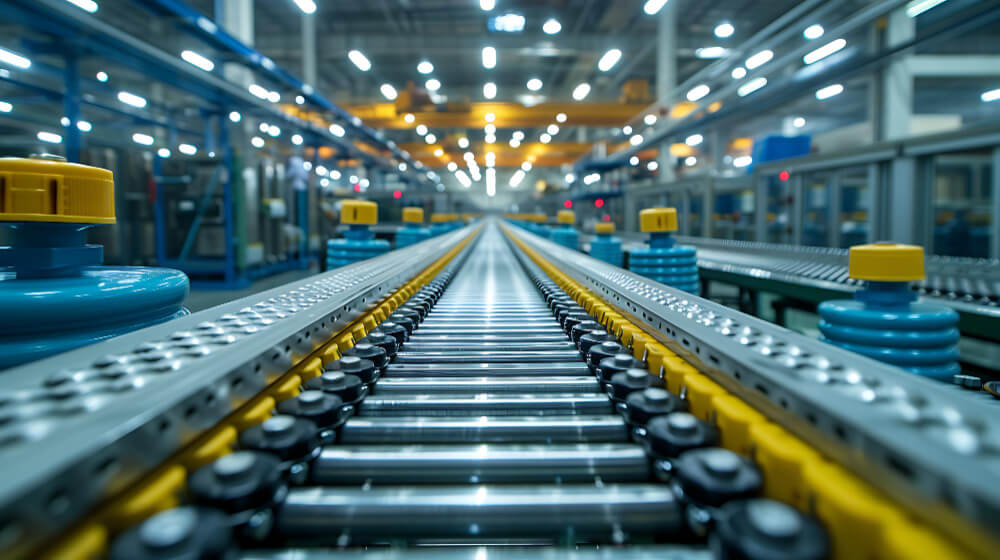
The industrial world is now moving toward total automation, whereas efficiency and speed are now the primary goals for every production line. This guide will explore the 10 most impactful conveyor system trends that define manufacturing and the global market in 2026.
1. Sensor-Driven and Smart Conveyors
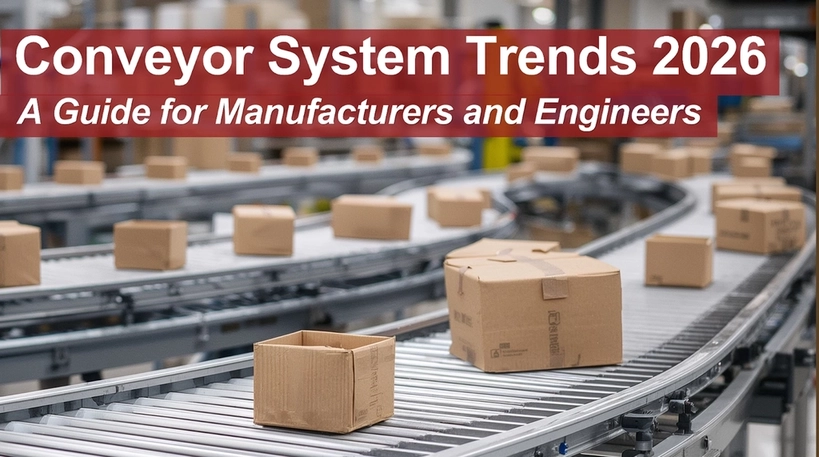
This year, 2026, smart conveyor systems equipped with sensors, encoders, and condition-monitoring systems have gained popularity and have become widely adopted in manufacturing industries. These systems constantly collect data on speed, temperature, load, vibration, and belt alignment.
Why does it matter?
- Predictive maintenance helps reduce unplanned downtime.
- Catastrophic failures can be prevented thanks to real-time alerts.
- Maintenance is now planned and well-structured, rather than reactive.
Smart conveyor systems integrated with PLC, SCADA, and MES platforms help manufacturers to monitor line performance in real time, enhancing Overall Equipment Effectiveness (OEE).
2. Modular Conveyors for Fast Line Changes
In 2026, manufacturers look for modular conveyor systems that may be reconfigured, extended, or relocated without major mechanical or civil modifications.
Key Advantages:
- Quicker installation and commissioning
- Effortless expansion for new SKUs
- Fewer spare parts needed
- Lower lifecycle cost
Industries like packaging, automotive, food processing, and e-commerce are increasingly standardizing on modular plastic belt conveyors and aluminum-framed systems.
3. Hygiene-Focused Conveyors for Food & Pharma
Hygienic conveyors have gained popularity in 2026 because of stricter global food safety and pharmaceutical standards. Manufacturers are now leaning more into conveyors, particularly designed for washdown environments, rather than hard-to-clean systems. These help minimize contamination risk while significantly cutting cleaning time and water consumption.
Key Advantages:
- Open-hinge modular belts
- Stainless steel frames
- Tool-less belt removal
- Minimal horizontal surfaces
- FDA and EU food-grade materials
4. Energy-Efficient & Low-Friction Conveyors
Rising energy costs are driving companies to prioritize conveyor efficiency. In 2026, energy-saving features are integrated directly into conveyor designs, rather than added.
Innovations driving efficiency:
- MDR (Motor Driven Roller) technology
- Low-friction modular belts
- Lightweight belt materials
- Optimized drive layouts
These energy-efficient features help reduce electricity consumption as well as lower heat generation and component wear.
5. Automated Conveyor Systems for Smart Factories
Nowadays, factories prefer conveyors that seamlessly integrate with robots, cobots, AGVs, and AMRs. Meaning, conveyors are built as automation enablers rather than standalone.
Automation-focused developments:
- Smart zone control
- Precision indexing conveyors
- Robot-compatible transfer modules
- Accumulation conveyors with zero back pressure
These automated conveyor systems enhance throughput without compromising product integrity, which is highly vital in high-speed packaging and assembly lines.
6. OEM-Centric Custom Conveyor Engineering
OEMs play a vital role in shaping conveyor trends in 2026. With this, custom-engineered conveyor solutions designed for specific machines and processes are replacing common off-the-shelf designs. Suppliers who collaborate early with OEMs can deliver better-performing and space-optimized systems.
OEM-driven priorities:
- Compact layouts
- Noise reduction
- High-speed reliability
- Machine synchronization
7. Conveyor Design with Digital Twins & Simulation
Conveyor systems are increasingly being validated via digital twins and simulation software before a single component is manufactured.
Key Advantages:
- Bottleneck identification before installation
- Load and speed optimization
- Reduced commissioning time
- Lower risk during scale-up
This year, digital validation has become a competitive advantage rather than a luxury.
8. Focus on Uptime, Reliability, and Low Maintenance
Downtime costs keep rising, making 2026 a year focused on uptime-optimized conveyor systems. Manufacturers are prioritizing conveyors that operate longer, stay cleaner, and require minimal maintenance only.
Primary Features:
- Maintenance-free bearings
- Easy-access drive units
- Standardized components
- Longer belt life materials
9. Sustainable and Eco-Conscious Conveyor Materials
Sustainability and eco-friendliness are influencing the choices for conveyor designs in 2026. The majority of manufacturers are now demanding materials and designs that help reduce environmental risks. Through these changes, companies can meet ESG goals without compromising performance.
Sustainability trends include:
- Recyclable belt materials
- Longer lifecycle components
- Reduced lubrication requirements
- Energy-efficient drives
10. Industry-Specific Conveyor Solutions
Industry-optimized conveyor solutions have gained attraction this year 2026, replacing those one-size-fits-all systems. This specialization then enhances productivity while also reducing operational risks.
For instance:
- High-grip belts for inclines
- Roller top belts for accumulation
- Cut-resistant belts for sharp products
- Textile printing belts for printing and finishing lines
Conclusion
The year 2026 is defined by the expansion of smart and automated conveyor systems. Efficiency, safety, and sustainability have become the primary goals for many manufacturers and engineers. These conveyor system trends show a clear move toward data-driven maintenance and safer operations, maintaining a productive manufacturing environment.
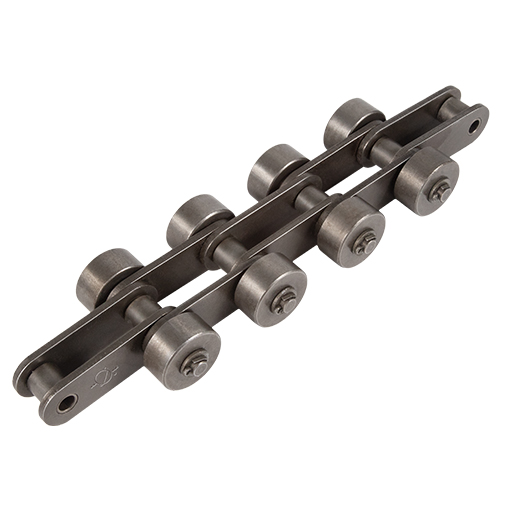
Universal Chain provides stable performance for systems in continuous operation. Our conveyor chain products offer full compatibility with various conveyor designs and manufacturing standards. Additionally, we offer a fast response for project-based inquiries to keep your timeline on track.