Double-Pitch Roller Chain: Applications and Selection Checks
Quick Answer: Double pitch roller chain is worth considering for low-speed light conveying and some long-center transmission duties. Check the exact dimensions, roller type, sprockets, operating tension and attachment loads before choosing a model. Universal’s double-pitch chain range includes A-series and C-series, giving buyers two series to compare against one application brief. Start with the machine’s duty, then request the model drawing and operating ratings. A matched specification makes quotations more useful than a chain number alone.
Use this guide to turn a chain number, replacement sample or machine requirement into a double pitch roller chain inquiry a supplier can assess. Resolve fit and working load before comparing offers.
What does double pitch mean on a roller chain?
Pitch is the distance between the centers of adjacent chain pins. A double pitch roller chain has twice the pitch of its corresponding short-pitch chain. The term describes spacing along the chain; width and operating capacity need separate checks.
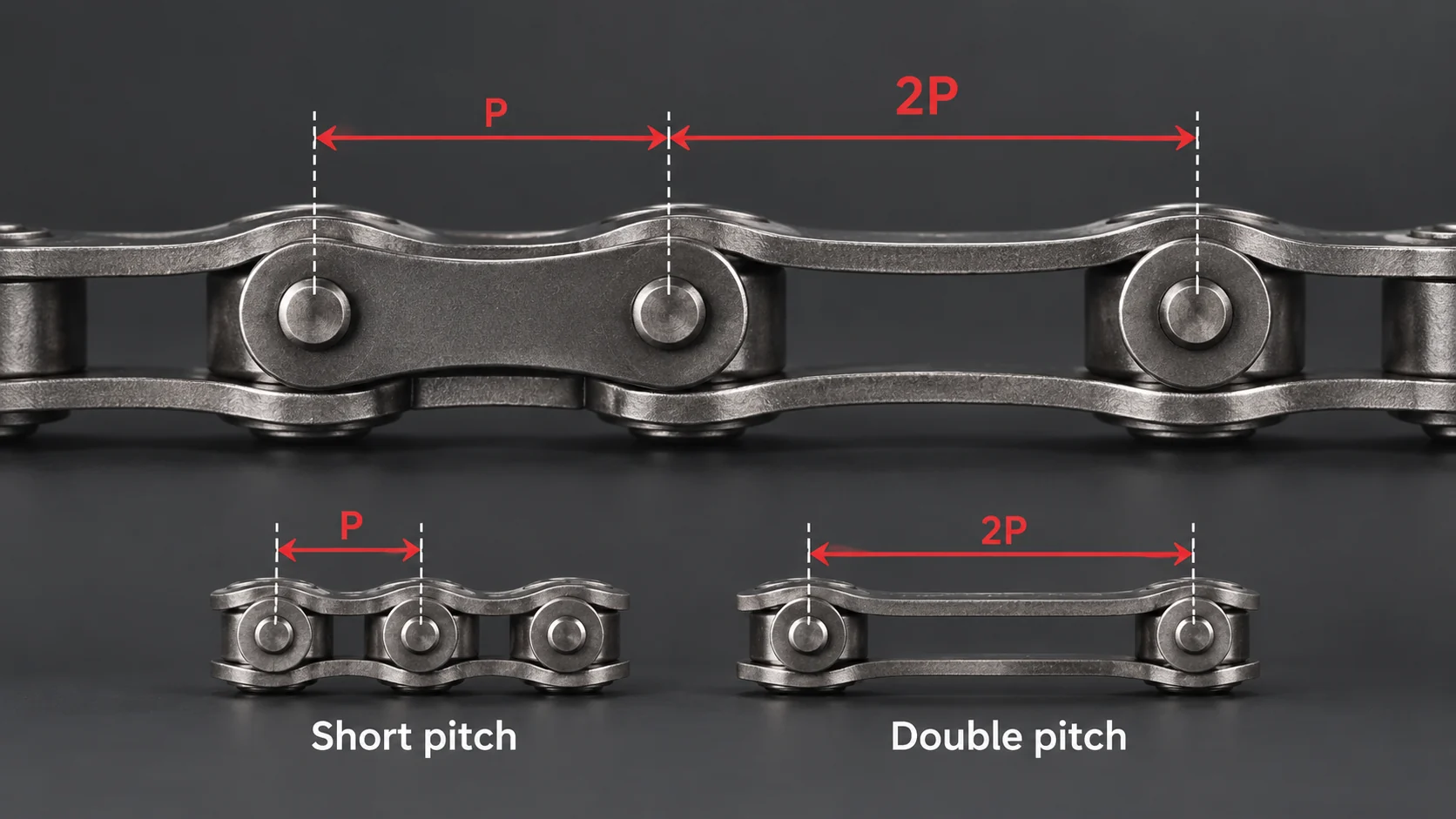
Double pitch also differs from double-strand construction, which uses parallel rows of chain. Neither term means you can simply double a load rating.
Record the complete chain number, manufacturer, series and suffixes when identifying a replacement. If the numbering is unfamiliar, Universal’s ANSI roller chain construction guide provides background. Confirm the complete designation against the exact product drawing.
Where is double-pitch chain a sensible option?
Start with the machine’s job. For light conveying at low speed, double pitch roller chain is a family to investigate, particularly when attachments carry fixtures or products. Universal’s conveyor chain overview can help you compare that requirement with other conveyor families.
For transmission duties, Universal describes its double-pitch family as lighter than the corresponding short-pitch chain and suited to low speeds and long distances between shaft centers. Its A-series product page provides a starting point for that duty; confirm the selected model’s rating.
On a conveyor, explain how the load is supported. Does it travel on chain rollers, rails or attached fixtures? Standard and oversized rollers are distinct choices. Tsubaki describes standard S rollers for short, slow conveyance and oversized R rollers for longer conveyors. Confirm the proposed roller and its carrying limit in the selected maker’s model data.
When should you keep standard pitch?
Keep the existing specification as your comparison point when replacing a chain. Changing pitch may also require a sprocket and attachment review. If the machine already uses short-pitch A-series chain, establish a reason to change before comparing purchase prices.
Check available sprocket space when speed consistency matters. Within a fixed space, longer pitch can mean fewer sprocket teeth and greater chordal action: the small variation in chain speed during engagement. Ask the machine designer to assess the complete drive geometry and speed requirement before changing pitch.
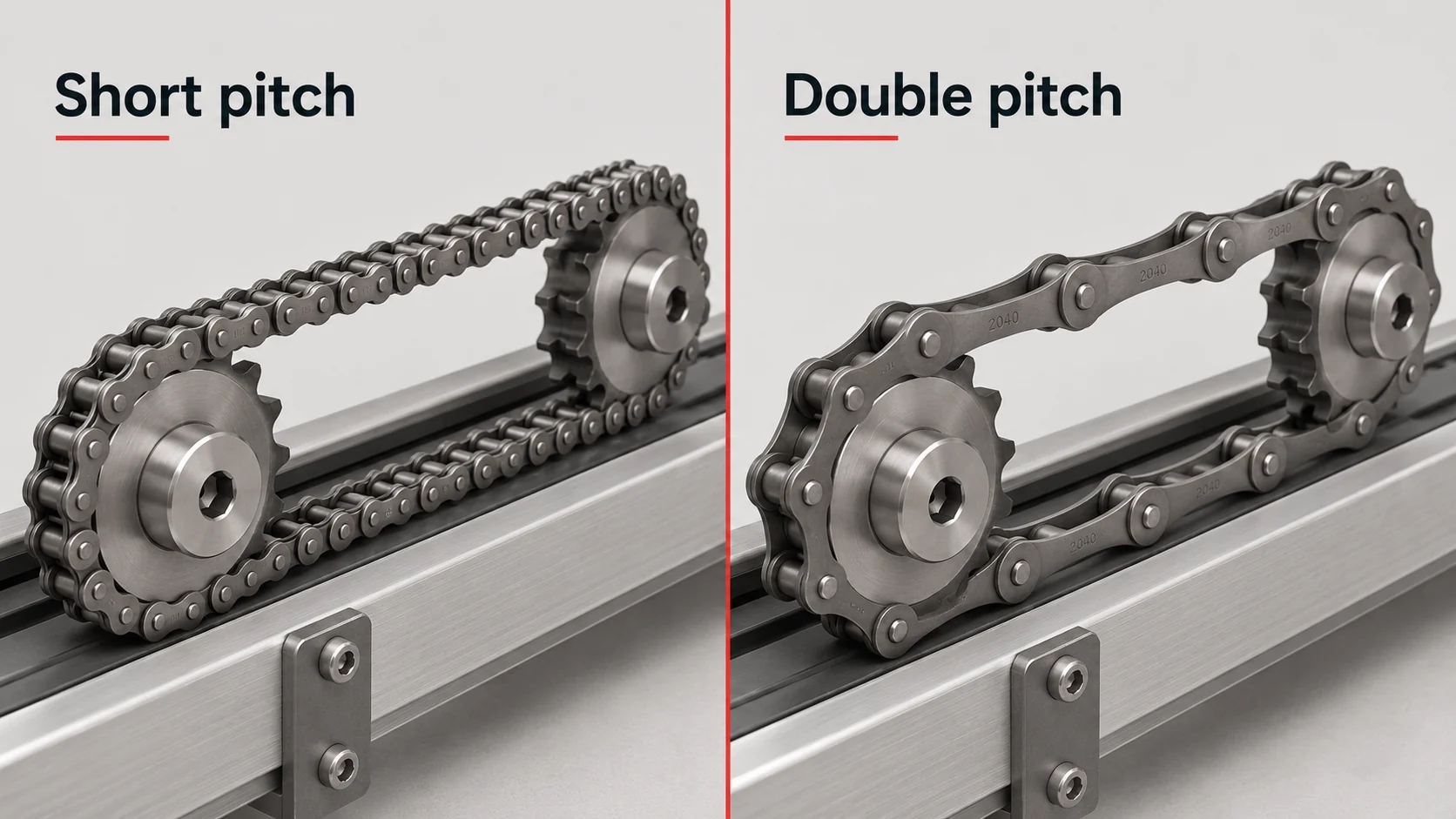
Compare a double pitch roller chain proposal with the complete installed package: chain, sprockets, joining parts and attachments. Ask for confirmed delivery terms for that package. Use the same package specification for each quotation so the comparison covers the parts you will actually install.
Which dimensions and sprockets must match?
When checking double pitch roller chain dimensions, compare a current dimensioned drawing with the machine requirement. Universal’s roller chain dimension guide explains the measurement names; use the chosen double-pitch model’s data for the actual values.
| Check | What to compare | Why it matters |
|---|---|---|
| Pitch and series | Pin-center distance, maker, complete designation and specified standard | Pitch alone does not identify an interchangeable chain |
| Roller | Outside diameter, roller type and contact with rails | Roller choice affects support and sprocket engagement |
| Inner width | Clear distance between the inner plates | The chain must match the sprocket tooth width |
| Pins and plates | Pin diameter and projection, plate height and thickness | These dimensions define interfaces and surrounding clearance |
| Assembly | Strand count, joining-link type and overall width | The supplied assembly must match the installation |
Universal’s C-series chain and attachment page includes dimensional images. Request the current drawing and tolerances for the precise model instead of measuring a product photograph.
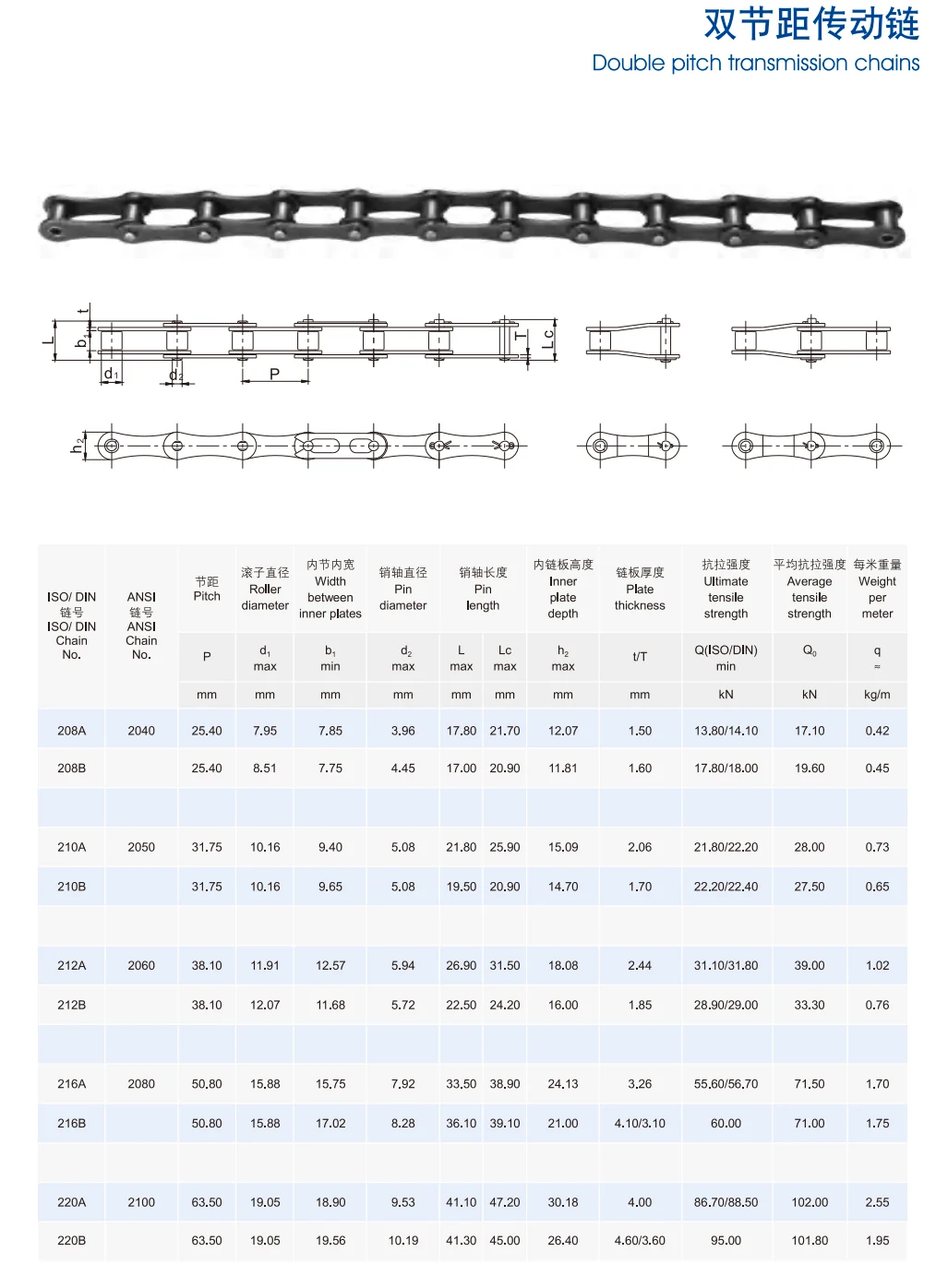
A sprocket is the toothed wheel that engages the chain. Do not approve an existing sprocket for double pitch roller chain because the pitch appears related. Reuse depends on roller geometry, tooth form, tooth count and effective engagement. Send the sprocket designation or drawing to the chain maker and ask for confirmation of the proposed pairing.
Which load and attachment details change the order?
Check operating loads separately
Tensile strength is a pull-to-break test figure. It is not the allowable working load for repeated operation. Tsubaki’s technical guide distinguishes these values and treats allowable roller load and maximum allowable chain tension as separate double-pitch selection checks. Use the selected manufacturer’s model ratings for the purchase decision.
For double pitch roller chain, obtain confirmation of three limits where applicable:
- Chain tension: the pulling force during operation, including starting and stopping effects.
- Roller load: the load carried by the rollers in their actual support arrangement.
- Attachment capacity: the permitted load where a fixture bends or twists an attachment.
Provide speed, start/stop frequency, acceleration, duty cycle and shock or jam conditions. Conveyed product mass alone does not establish chain tension. Ask the supplier or machine designer to confirm the operating rating for the specified duty and joining arrangement.
Specify the attachment pattern
For double pitch roller chain attachments, include the mounting details as well as the code. Common labels use A for bent attachments on one side and K for bent attachments on both sides. SA and SK indicate the corresponding straight styles; 1 or 2 identifies the hole count. Confirm the supplier’s notation against its drawing.
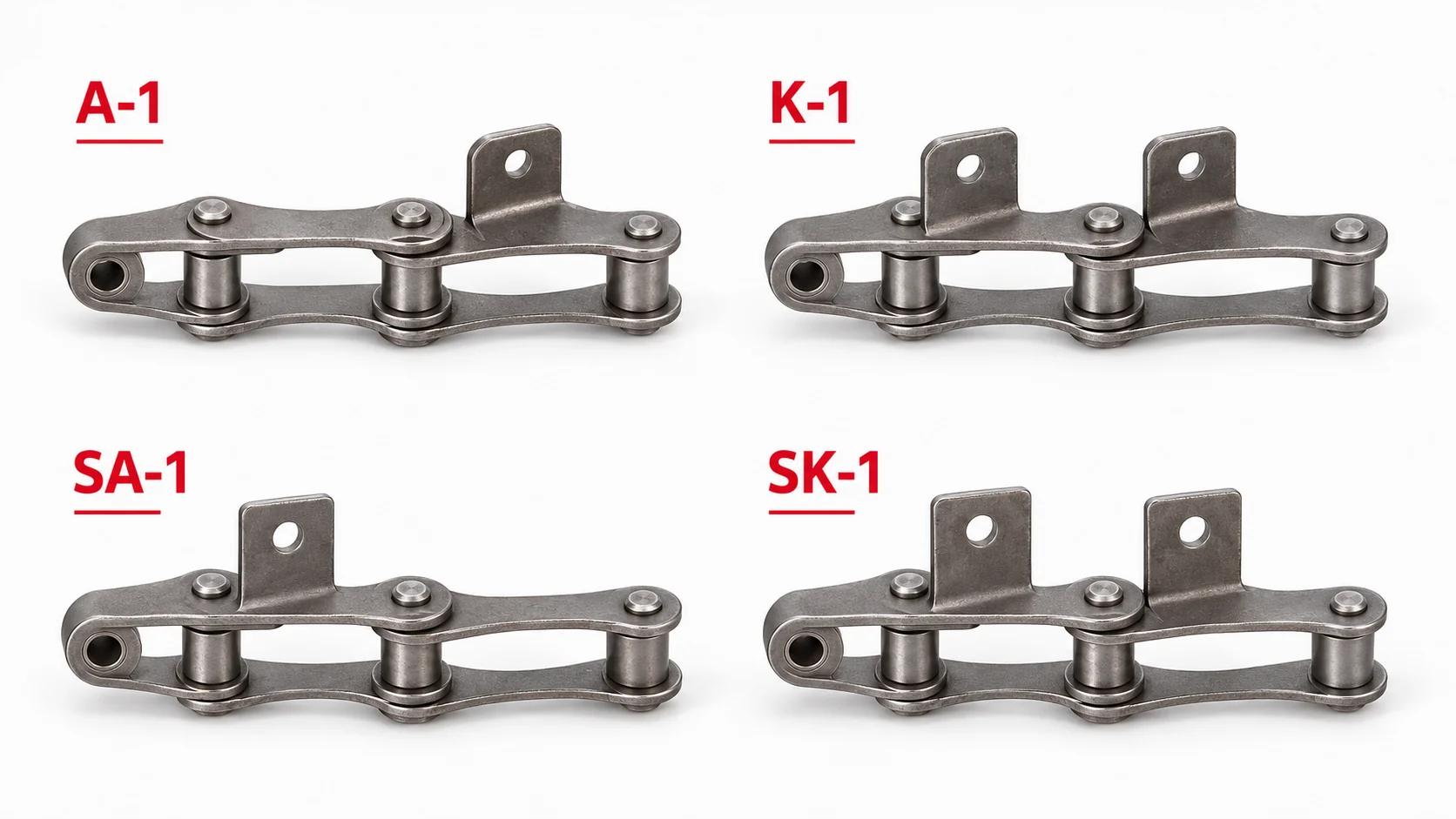
Specify hole diameter, hole centers, attachment height and orientation, plus clearance around fixtures, guides and guards. Where two chains work together, show the required left/right pattern and alignment.
Describe attachment intervals in pitches and millimeters. For a hypothetical 25.4 mm pitch, an interval of four pitches equals 101.6 mm. Mark this requested spacing and sequence on the double pitch roller chain assembly drawing for the supplier to confirm. State whether the interval refers to every link, every outer link or a defined repeating pattern. If a supplier proposes a different pattern, compare its mounting positions with the fixture drawing before accepting the change.
If the design instead needs crossbars through the pins, hollow-pin conveyor chain is a separate mounting option to discuss. It requires its own fit and load checks.
Match the environment and maintenance access
Describe water exposure, chemicals, temperature and dust before choosing a material. Universal lists corrosion-resistant chain options; compare the selected coating with the actual conditions. Its stainless steel chain range is another branch to investigate, with the grade and operating rating confirmed separately.
For double pitch roller chain in restricted spaces, also show how maintenance staff can reach lubrication and inspection points. Universal’s chain lubrication guide provides background; follow the selected chain and equipment instructions for the method and intervals.
When should you request a drawing or sample?
Request a current drawing before placing the order. Add a representative sample check when an unidentified replacement, roller arrangement, attachment pattern or surrounding clearance remains uncertain. Plan any fit trial under the chain maker’s or equipment manufacturer’s approved procedure; the installation and maintenance guide gives background on alignment and engagement checks.
Include these details in the inquiry:
- Machine model, chain designation, drawings and photographs or sample references.
- Required length or link count, joining arrangement and attachment sequence.
- Sprocket details, operating duty, support arrangement and environmental conditions.
- Quantity, acceptance documents and requested delivery date.
For quality acceptance, request dimensional inspection records tied to the agreed model and drawing revision, plus documented operating ratings where applicable. Before releasing a double pitch roller chain order, obtain written confirmation of critical dimensions, sprocket fit and applicable operating limits. A successful sample fit leaves load capacity to be confirmed separately by the supplier or machine designer. Keep the accepted drawing revision and sample-check results with the order.
To discuss a specific requirement, send Universal your chain drawing and duty details, together with the sprocket information, attachment pattern and quantity. Identify any unresolved dimensions so they can be addressed before the purchase specification is finalized.