Short pitch precision roller chain (A series)
Short pitch precision roller chain designed for stable power transmission in industrial drive systems.
View More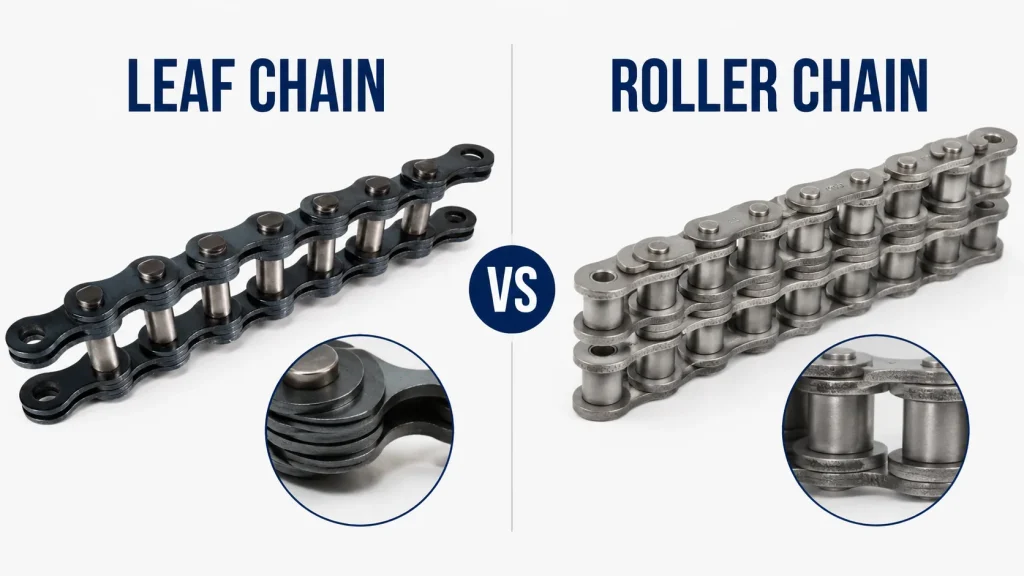
https://www.universalchain.net/product/roller-chain
Leaf chain is made up of overlapping link plates and pins which are engineered exclusively for high-tensile lifting without using any sprockets. Meanwhile, roller chains use pins, bushings, and rollers to transmit mechanical rotating power through sprockets.
Universal Chain offers both high-performance leaf chains and roller chains that comply with ISO 4347 and ANSI B29.8. Notably, its ISO 9001 approved manufacturing facilities provide tension linkage products to more than 50 countries.
A leaf chain deals with tension linkages designed purely for reciprocating vertical motion. Contrary to drive linkages, these chains are made up of link plates that interlock directly on smooth steel pins. This kind of chain does not have bushings, inner rollers, and engagement of teeth mechanics.
The stacking of link plates provides high tensile strength in an extremely narrow cross-section. The link plates alternate in the interlocking manner in 2×2, 4×4 or 6×6 series across the entire width of the chain. Additionally, tension forces pass directly through plate lugs and pins during pure tension operations.
Equipment designs rely on these chains over sheave pulleys compared to toothed drive sprockets. Smooth sheaves guide the linkage, allowing the stacked link plates to articulate seamlessly without needing tooth engagement or risking mechanical binding. You may assess the Universal Chain’s leaf chain products catalog based on your choices.
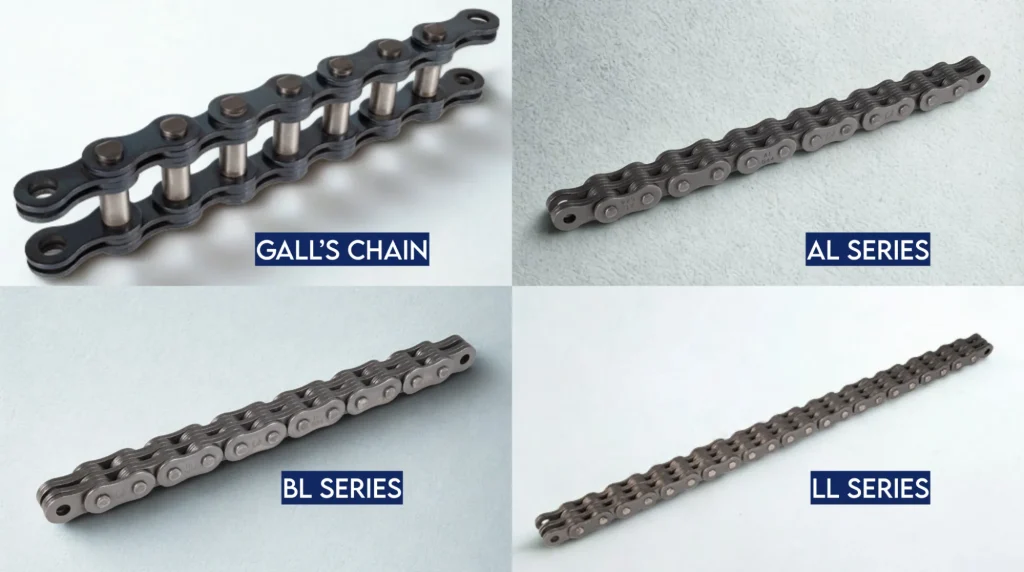
Analyzing leaf chain vs roller chain shows significant structural differences based on the different force transmission characteristics. Knowing these distinctions helps avoid major equipment breakdown and structural fatigue due to stress loading.
The leaf-type chain does not have any bushings or rotating rollers to allow thick and compact plate construction. It is much more fatigue resistant than the roller chain when subjected to both static and dynamic tensile forces. It cannot, however, undergo smooth sprocket engagement during high-speed rotation due to the absence of rotating rollers.
On the other hand, the roller chain consists of pins, bushings, and sleeves that rotate through engagement with the teeth of the sprocket. You can explore drive options in Universal Chain’s roller chain or precision roller chains selection guide.
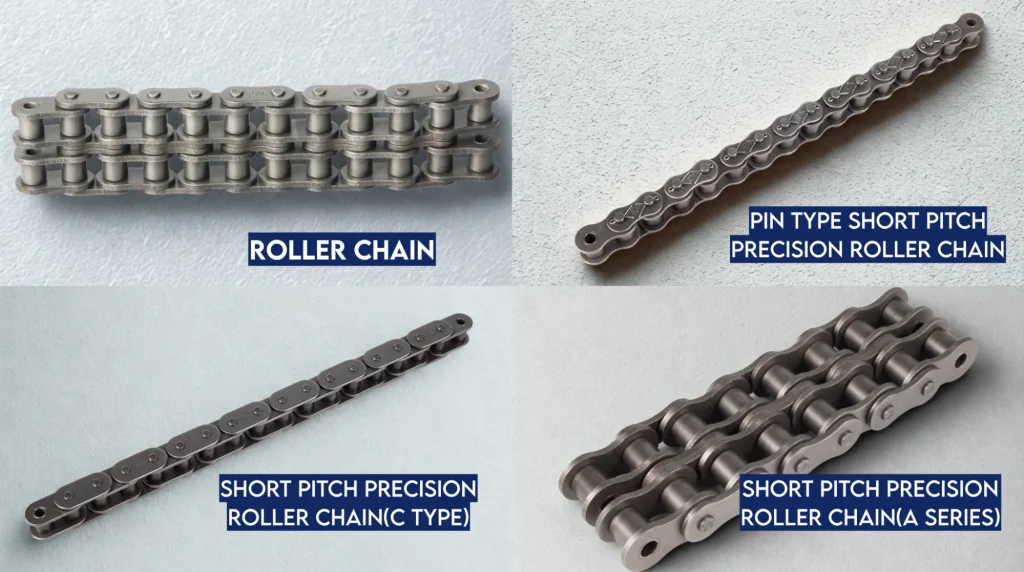
https://www.universalchain.net/product/precision-roller-chain
https://www.universalchain.net/product/roller-chain
| Technical Specification | Leaf Chain (BL / AL / LL) | Standard Roller Chain (ANSI / ISO) |
| Internal Components | Link plates and pins only | Pins, bushings, and rollers |
| Primary Motion Type | Reciprocating tension lifting | Rotational power drive transfer |
| Mating Interface | Smooth grooved sheaves | Toothed drive sprockets |
| Tensile Strength Density | Very high (multiple plate stackings) | Moderate (limited by bushing space) |
| Wear Mechanism | Pin and plate joint articulation | Bushing and roller surface rotation |
You can use leaf-type chains in cases where it is required to lift heavy loads due to the restriction of sizes of drive parts by space constraints.
Apply these tension linkages where application physics require maximum working load capacity in narrow overhead mast tracks. Reciprocating systems that work in static loading conditions would greatly profit from the plate tension chain design.
Do not apply leaf-type chains in continuously moving fast speed drive or gearbox applications. Due to lack of rotating bushing, fast movement will cause friction wear and pin galling. For high speed drive needs, precision roller chain drives should be applied.
Primary leaf chain applications include material handling, construction hoists, and industrial counterweight systems. Leaf-type chain linkages maintain very high static loads while taking heavy shock loads under daily industrial load operations.
Key industrial applications areas include:
Discover complete industry implementations on Universal Chain’s industrial application overview page for specialized engineering configurations.
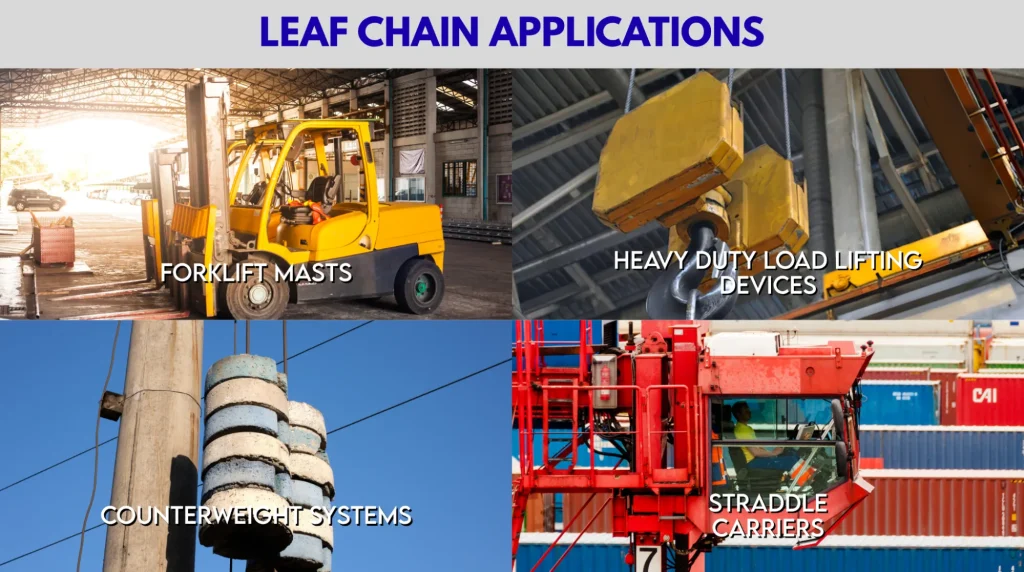
Leaf-type chains are heavily based on specific series of dimensions and structure which are standardized by the international engineering standardization bodies. Here’s a comparison table for better understanding:
| Chain Series | Dimensional Base Standard | Plate Thickness / Contour | Primary Application Field |
| BL Series (LH) | Heavy duty (ANSI B29.8) | Thicker plates (next pitch size up) | High shock load forklift masts |
| AL Series | Light duty (ANSI B29.8) | Thinner plates (same pitch size) | Light lifting and machine balance |
| LL Series (EL) | European standard (ISO 4347) | British Standard (BS) dimensions | European machine tools & lifts |
The selection of the forklift leaf chain depends on calculation of the total safety factors for the peak load capacity. The industry standard safety factor ratio usually has 5:1 for the maximum load capacity. Leaf chain types forklift must take into consideration the shock loading from sudden deceleration.
| Chain Part Number | Pitch (Inches / mm) | Lacing Configuration | Pin Diameter (mm) | Min. Tensile Strength (kN) |
| BL423 | 0.500 in (12.70 mm) | 2 x 3 | 5.09 mm | 33.4 kN |
| BL634 | 0.750 in (19.05 mm) | 3 x 4 | 7.92 mm | 107.6 kN |
| BL844 | 1.000 in (25.40 mm) | 4 x 4 | 9.53 mm | 222.4 kN |
| BL1044 | 1.250 in (31.75 mm) | 4 x 4 | 11.11 mm | 322.0 kN |
Review proper system maintenance through Universal Chain’s internal leaf chain lubrication guide. For comprehensive inspection protocols, read the company’s guide on how to inspect and maintain a forklift chain.
Regular maintenance is important to ensure safe operation and avoid unexpected tensile failures of heavy lifting gear. Tension links should be inspected every 500 hours of operation or once a month in case of severe working conditions. Moreover, chain elongation due to wear is checked through special elongation gauges in the contact areas of pins.
Tension chains need replacement if total chain wear exceeds 3% of initial pitch length. Pin heads should also be inspected for rotation, rust pitting, wear on edges, or any cracks around holes in link plates. With that, special high viscosity lubricant must be used in joint clearances during the scheduled inspections and maintenance.
To measure and identify leaf-type chains involves making three important dimension measurements on the link assembly. By combining the three measurements above, one can refer to the manufacturer’s selection chart. Accurate identification guarantees proper fitment of components while servicing the mast.
Short pitch precision roller chain designed for stable power transmission in industrial drive systems.
View More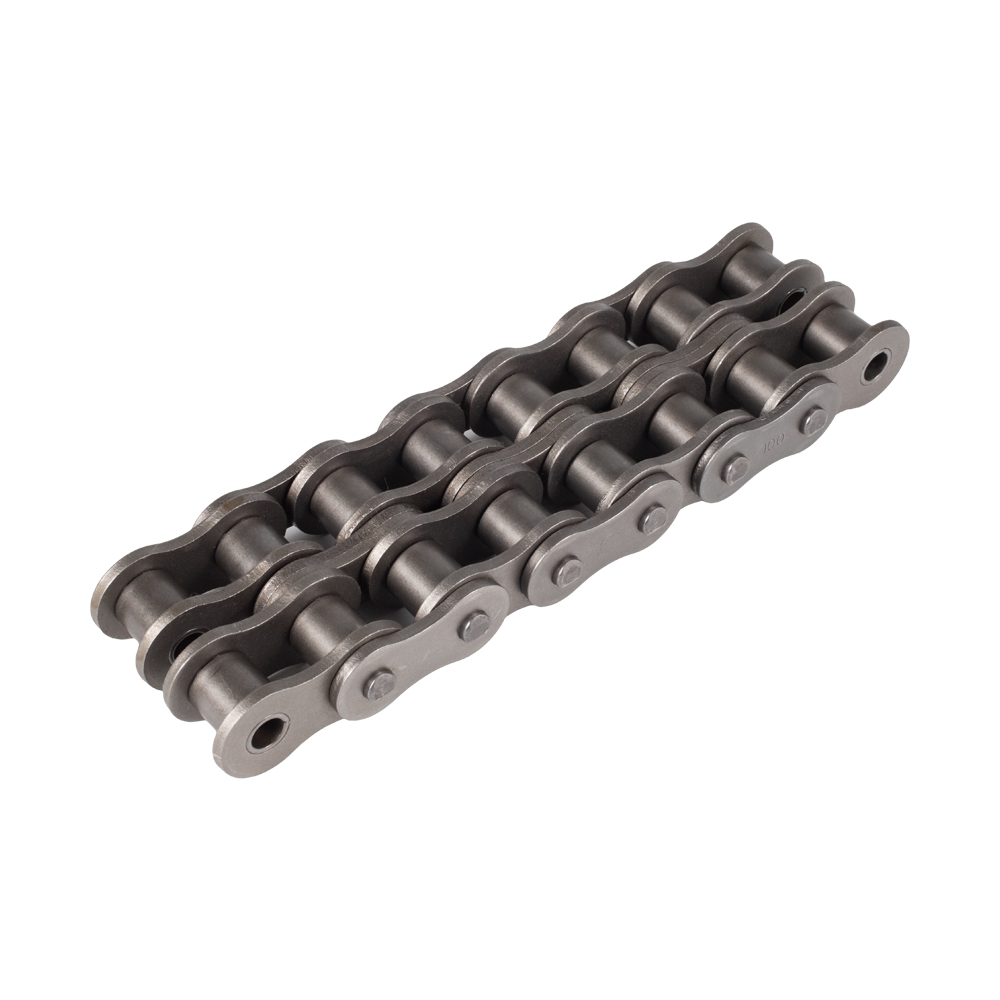
AL leaf chain is a light load series, mainly used in manual hydraulic forklifts, small tonnage electric forklifts and small tonnage diesel forklifts.
View More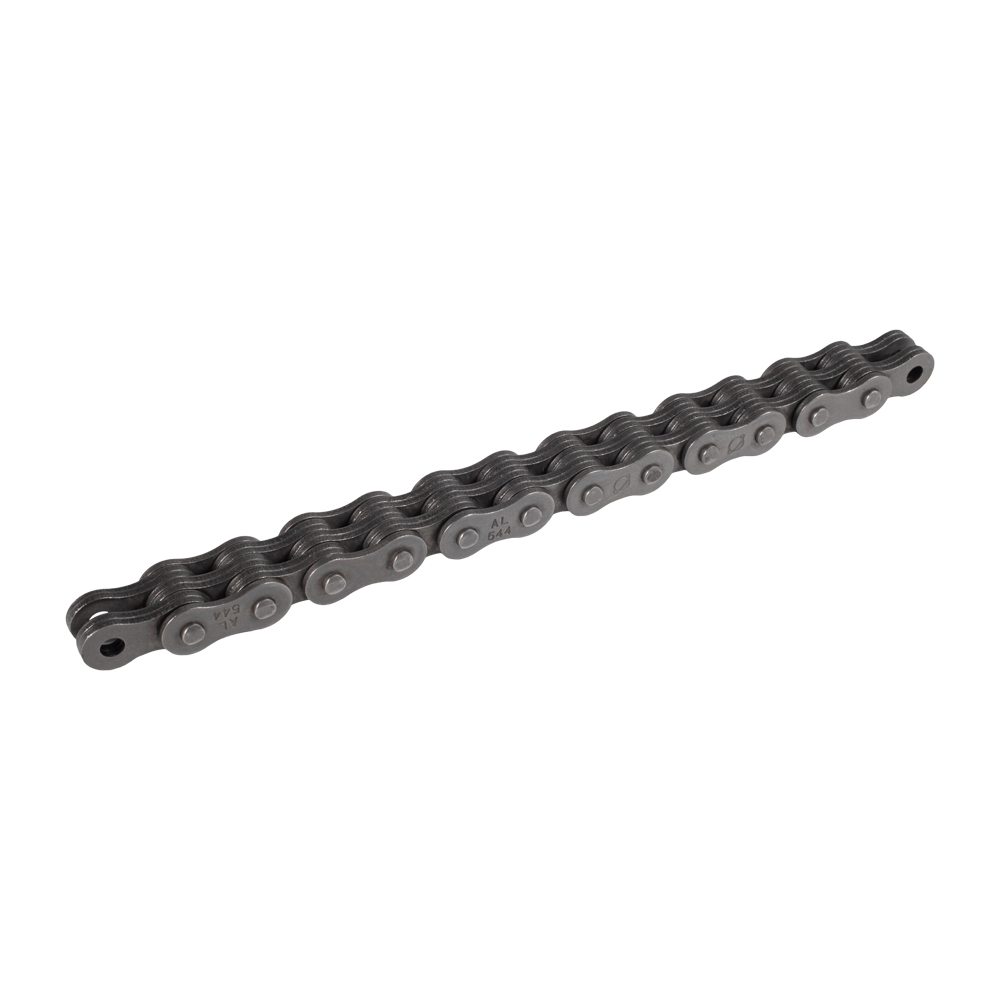
AI DETECTION (used app: https://copyleaks.com/ai-detector)
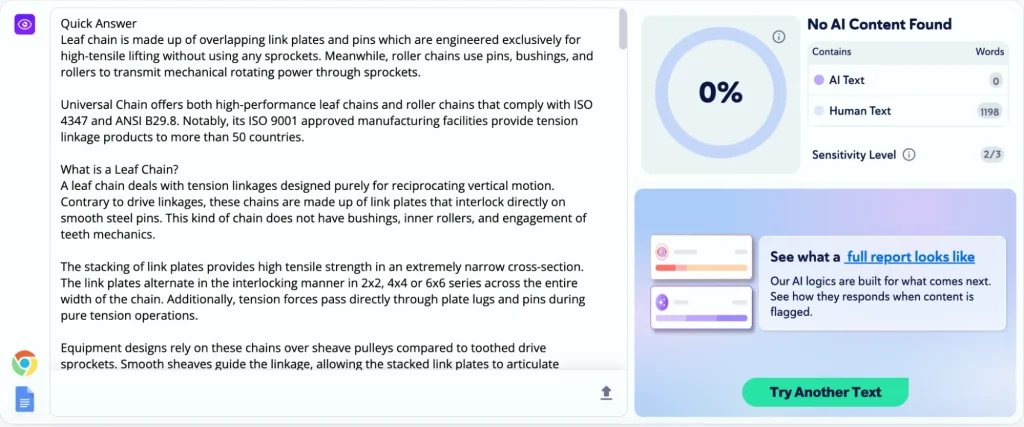

B2B CHECKER JUSTIFICATIONS (to debunk the validity of score)

✅ Both the primary and secondary keywords are present.
✅ Global standards and factory capabilities were mentioned in the article.
✅ No sentences exceed the 20-22 words. Take note that the GDocs word counter does not match with the B2B checker.
✅ The content, every after the headings, were written in NLP format.
✅ Photos were present as well.