Oilfield Chain for Pumping Units: What Buyers Should Specify
Quick Answer: Specify an oil field chain for a pumping unit by recording the machine and existing chain, the full cyclic and shock-load duty, the operating environment, physical fit, and the complete connecting arrangement. Then ask the supplier for model-specific ratings, drawings, and current conformity documents. Universal’s oilfield-chain and pumping-unit-chain product scope gives buyers a useful starting point for comparing standard, heavy-duty, and multirow options, but the installed duty and verified evidence should govern the final order.
Those five parts let the supplier quote against evidence rather than assumptions about fit, fatigue, wear, or documentation.
What does an oil field chain do on a pumping unit?
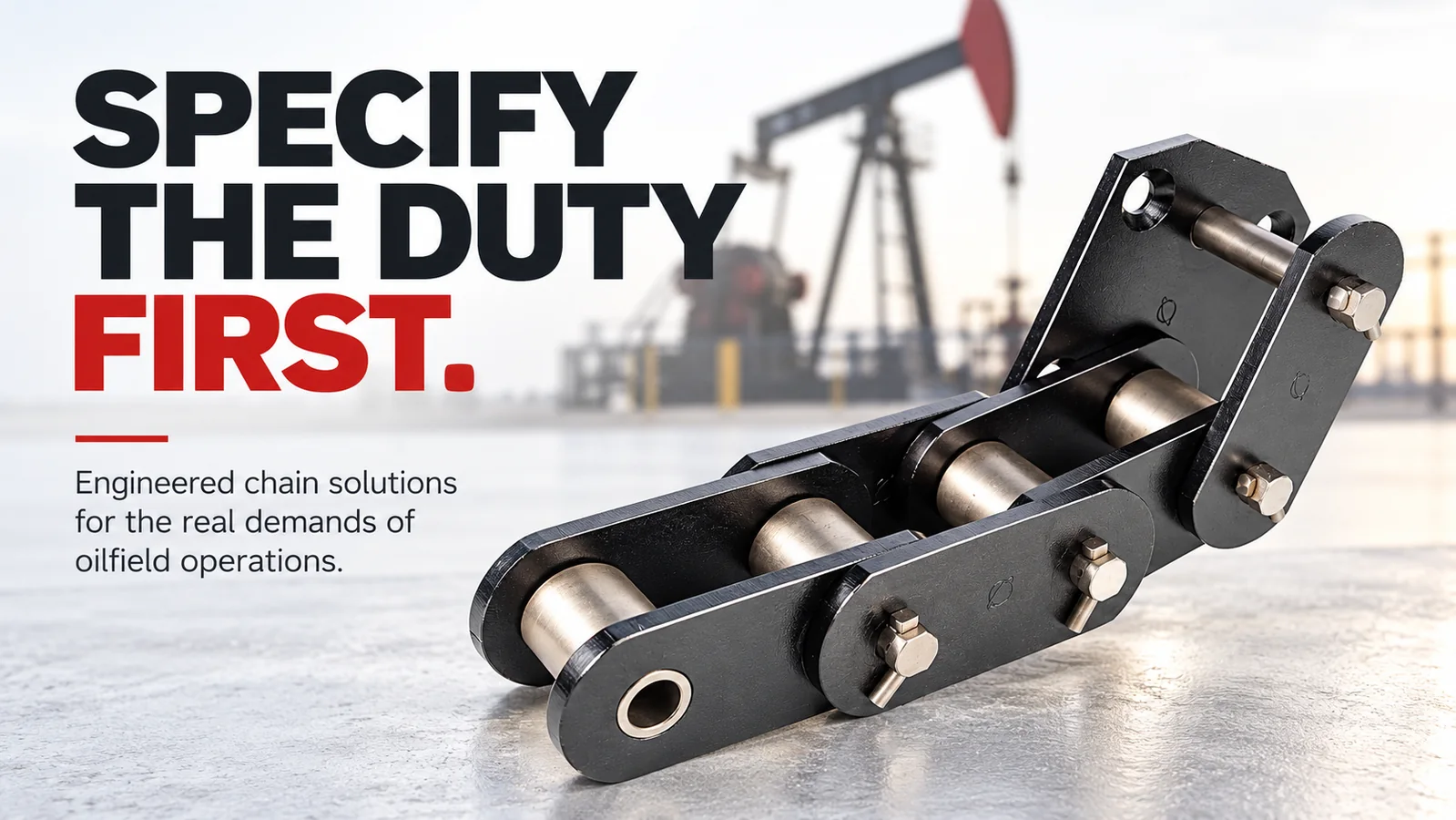
“Oil field chain” is a broad buying term. On a belt pumping unit, the chain provides the power-transmission link for reciprocating motion. Universal describes its pumping-unit chain as a large-pitch, heavy-duty, straight-plate roller chain for that duty. Its broader oil field chain family uses short-pitch precision roller-chain specifications and sizes, with single-row, multirow, standard, and heavy-duty variants.
Those families are not interchangeable merely because both appear under oilfield products. The oilfield application overview also covers mud-pump drives, transmissions, draw works, and catshafts. Name the equipment and duty so the supplier can select the relevant family and model. Universal’s reference to heavy and high-impact service describes the product page’s scope, not a rating for every model. Start with the drive-chain range, then require a model-specific recommendation.
What operating duty should you describe first?
Begin with the equipment make, model, serial number, and the current chain’s brand, number, and drawing revision. Add its function, sprocket arrangement, center distance, running hours, speed or stroke data, starts and stops, and whether operation is continuous, intermittent, or reversing. A part number does not explain how the chain is loaded.
Describe symptoms in neutral language: elongation, plate cracks, roller damage, pin wear, corrosion, noise, slack, or uneven sprocket wear. The roller-chain failure guide treats fatigue, abrasive wear, corrosion, and lubrication as different mechanisms, so one symptom cannot identify the cause. Add inspection dates, lubricant and interval, alignment history, and any shock or jam event.
How do load cycles and shock change the specification?
Working load is the load a chain may carry under the manufacturer’s stated operating conditions. Tensile strength is a breaking-test figure. They are not the same allowance. Renold’s oilfield brochure explains the distinction and cautions that tensile strength alone is not a useful indicator of wear or fatigue.
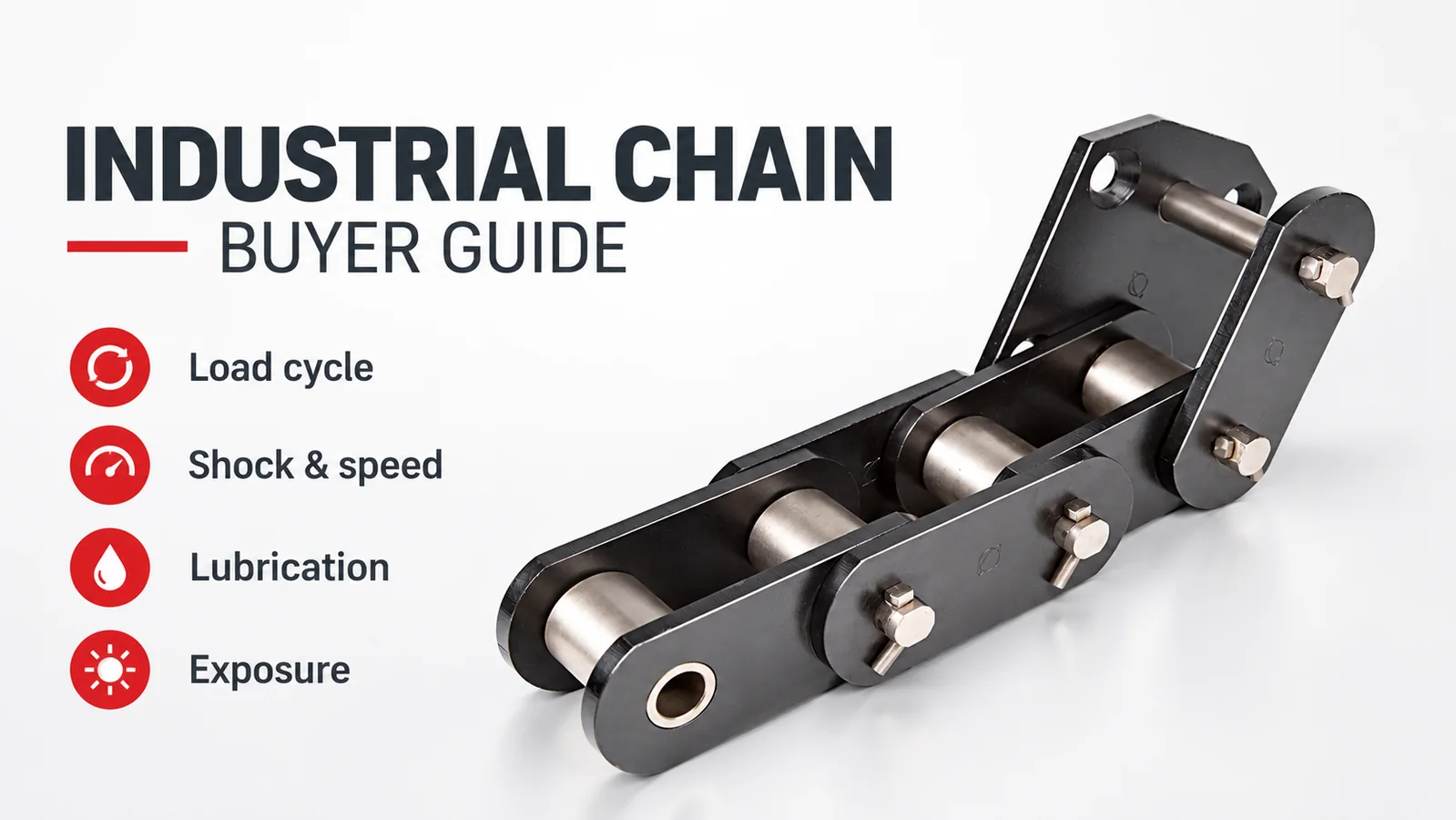
Ask what maximum tension, working load, speed, duty, and service-factor assumptions apply to the proposed model. Send any motor power, torque, measured tension, or equipment calculation with units and operating points. When the oil field chain may need a stronger or more fatigue-resistant construction, review Universal’s high-strength roller-chain range and its T-series examples. Neither supplies a pumping-unit rating for your machine.
Shock needs its own entry. A supplier-authored Diamond-Drives case attributes repeated directional-drilling breakage to high shock loads and describes a replacement with wide-waisted plates, through-hardened pins, ballized pitch holes, and solid bushings and rollers. It does not establish Universal performance. Its lesson is narrower: identify shock events and ask whether the chain and joining parts suit that duty.
Which environmental conditions belong in the buying brief?
Describe abrasive dust or sand, water, salt, mud, chemicals, washdown, and temperature range. State whether they reach the chain continuously or only during seasonal work. Record lubrication access and cleaning restrictions. Universal’s installation and maintenance guide provides alignment, tension, and inspection context; the equipment and chain maker’s instructions still control.
Coating language should follow the exposure. Universal lists Dacromet-plated, zinc-plated, and nickel-plated chain options, but a product name or coating label alone does not establish suitability for a chemical, temperature, or washdown cycle. Ask for the applicable substrate, coating specification, and service limits. Where frequent relubrication is impractical, investigate self-lubricating roller chain; it still needs a duty and inspection review.
How should you confirm pitch, strand count and chain length?
Pitch is the distance between adjacent pin centers. Strand count is the number of parallel chain rows. Pitch controls engagement geometry; strand count changes assembly width and load sharing. Multirow chain can provide more capacity without a larger pitch, but Universal notes that it needs precise parallel alignment.
Use the multirow selection guide when row count is uncertain. Then ask for a drawing confirming pitch, link count, widths, roller and pin dimensions, plate dimensions, and transverse pitch. The precision roller-chain range and A-series product page provide reference families; neither proves that its parts fit.
Is strand count the same as double pitch?
No. Strand count describes parallel rows joined into one assembly. Double pitch describes a longer distance between pin centers. If a heavy or nonstandard construction is under discussion, compare it with the heavy-duty cranked-link range and require the drawing. Also provide sprocket tooth count, pitch, face width, wear condition, and center distance. Nominal pitch alone does not confirm transverse pitch, tooth form, or width.
What connecting hardware must match the replacement chain?
Every oil field chain order should identify the connecting link or master link by supplier part number and state its pin-retention method. Record whether an odd link count needs an offset link, how the joint is fixed, and what side clearance the installation allows. Do not accept a generic master link by pitch alone.
Confirm side plates, pins, retainers, installation direction, and whether the joining part has a lower allowed load or shorter fatigue life than the base chain. Renold warns that offset and slip-fit joints require special consideration in some fatigue-resistant families; that is vendor-specific, not a rule for Universal. Use the installation and maintenance guide for general checks and the catalogue for available technical material.
What should you verify in API-related chain claims?
Universal’s oil field chain page states that the company has passed product certification to API Spec 7F. That documents the website’s claim. It does not provide a certificate number, covered models, factory scope, or current validity.
The program context matters. On June 12, 2025, the API Monogram Program announced that API Spec 7F, Oil Field Chain and Sprockets, had been removed from the Monogram Licensing Program. API said the document was withdrawn from its active standards list and retained as historical material, and that existing 7F Monogram licenses were to be withdrawn by December 17, 2025. API’s addenda and errata page identifies the historical 8th edition as November 2010 with Errata 1 from May 2013.
As of October 28, 2026, treat “API certified” on a product page as incomplete. Ask for the certificate or supplier-controlled conformity document, its number, the exact models and manufacturing locations covered, the standard edition and errata applied, its current status, and lot or batch traceability. Ask the supplier to explain which statement remains supportable and provide the referenced test or inspection reports. A logo or certification sentence without that evidence should not support a current certification claim.
What belongs in a replacement oil field chain RFQ?
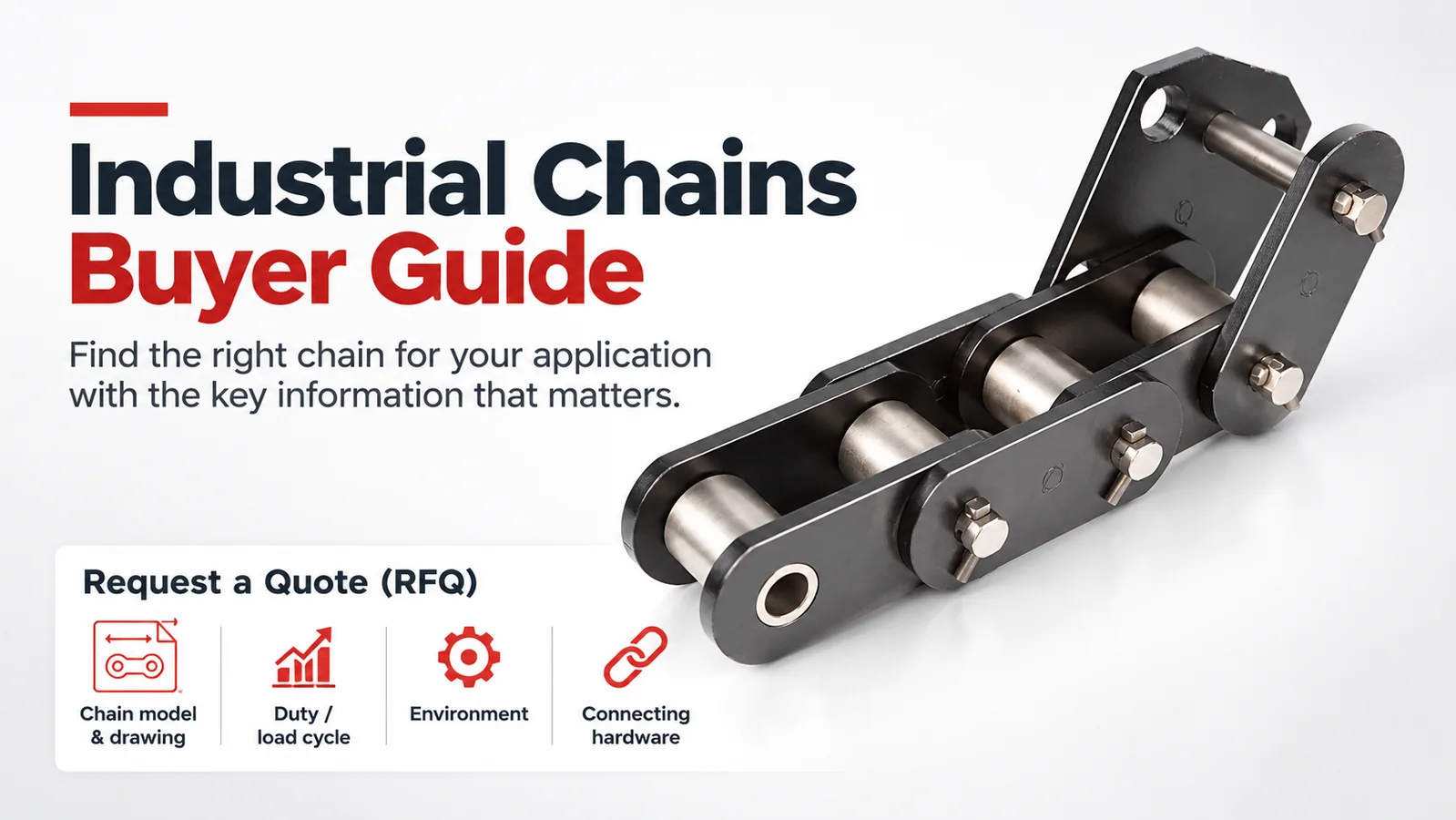
A replacement oil field chain RFQ should expose the evidence behind the recommendation and leave no important assumption hidden.
| RFQ field | What to provide |
|---|---|
| Machine and chain | Equipment make/model/serial, chain number, drawing revision, photographs, and wear or failure history |
| Duty | Running pattern, speed or stroke data, starts and stops, load evidence, shock events, maintenance interval, and required service basis |
| Environment | Dust, moisture, salt, chemicals, temperature, washdown, cleaning method, and lubrication access |
| Dimensions | Pitch, strand count, link count or length, inner and outer widths, roller and pin dimensions, transverse pitch, plate width, and tolerances |
| Sprockets and layout | Tooth count and profile, face width, wear, center distance, available envelope, and alignment record |
| Joining hardware | Connecting/master link, offset-link need, part number, pin retention, and installation instructions |
| Documents | Current drawing, rated working load, material and heat treatment, inspection or test records, traceability, packaging data, and standard-conformity documents |
| Commercial details | Initial and annual quantity, destination, Incoterms, required date, marking, and packaging |
Ask the supplier to mark assumptions, exceptions, and unresolved dimensions in the quotation. Require the drawing for the exact offer.
How can you compare replies before ordering?
For each oil field chain quotation, compare the same model, drawing revision, strand count, material, coating, and document set. Check that every RFQ item was answered and ratings use consistent units and matching conditions. A lower price does not make a brief complete, and a tensile figure does not replace a working-load answer.
Before ordering, approve the final drawing and confirm sprocket, connecting-hardware, tension, lubrication, and installation requirements against current equipment documentation. Keep the approved drawing and evidence list with the purchase order.
Send Universal Chains the machine model, current chain number or drawing, duty record, required dimensions, complete connecting arrangement, quantity, and document needs through its contact page for a specification review.