How to Measure Roller Chain Wear with a Gauge
Quick Answer: Match the roller chain wear gauge to the exact chain size, then measure a straight, taut section with the machine stopped and safely isolated. Position the tool as its instructions show, read its scale or pass/fail indication, and repeat at several locations. Compare the results with the equipment and chain maker’s applicable limit. Universal Chains combines a manufacturing history dating to 1970 with standard and application-specific roller-chain options, giving buyers a relevant starting point for replacement specification checks.
A useful inspection record tells purchasing more than “the chain looks stretched.” This guide explains how to choose a compatible tool, obtain a valid reading and decide what information belongs in a replacement inquiry. It focuses on industrial precision roller chains; the actual machine and gauge instructions control the work.
What does a roller chain wear gauge measure?
A roller chain wear gauge checks the increase in chain length caused by wear. This increase is called elongation. Under normal rated loads, wear at the pins and bushings, the sleeves around the pins, increases clearance at each joint. Across several joints, those small increases add up.
Pitch is the distance between adjacent pin centers. A worn chain’s measured span becomes longer than its original pitch multiplied by the number of pitch intervals. Our chain terminology guide explains the basic components if the names are unfamiliar.
Slack alone does not tell you the wear percentage. Likewise, a roller chain wear gauge does not check every possible defect or predict remaining service life. Treat elongation as one part of the condition assessment.
Which gauge fits your roller chain?
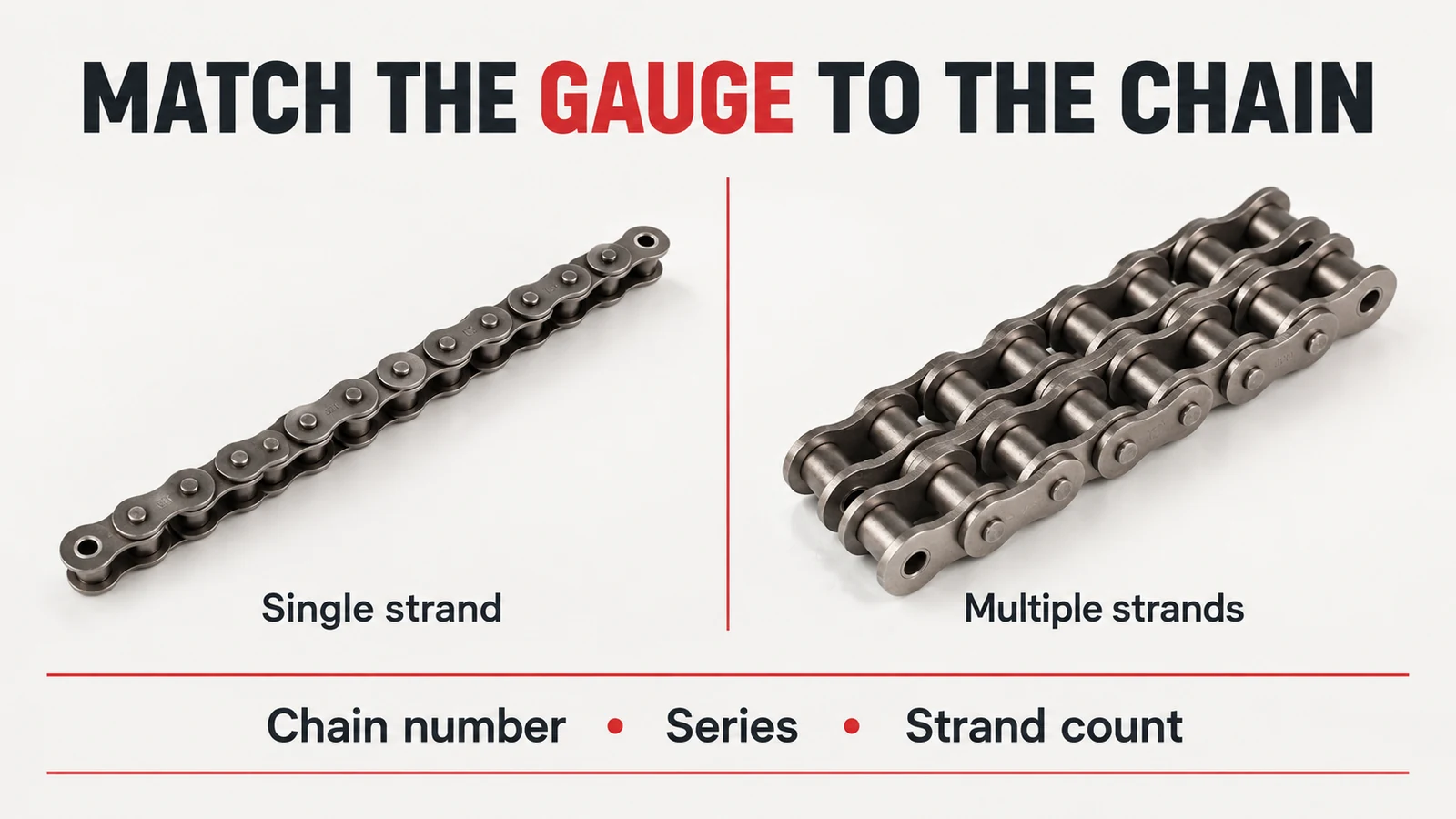
Check the chain number, series and tool instructions before taking a reading. A roller chain wear gauge that does not match the chain can produce a misleading result, even when it appears to fit between the rollers.
Use the stamped marking or equipment documentation first. If identification is unclear, confirm pitch, roller diameter and inner width using the roller-chain measurement guide.
Keep the series name in the record. Universal’s A-series roller chains and B-series roller chains have separate product specifications; a similar appearance or pitch does not establish full compatibility.
Also note the strand count, meaning the number of parallel rows. The guide to single- and double-strand roller chains can help buyers describe this correctly. Confirm that the tool supports the chain’s exact construction and provides the measurement range you need.
When purchasing a roller chain wear gauge, ask for the supported chain sizes, contact instructions and indication threshold. Keep that information with the tool. A pass/fail result has limited value if the person reviewing it cannot identify which threshold was checked.
How do you measure roller chain wear with a gauge?
Have a competent maintenance person perform the physical check. Prepare the roller chain wear gauge, its instructions, the chain identification and the applicable replacement limit before opening the inspection area.
How should you prepare the chain?
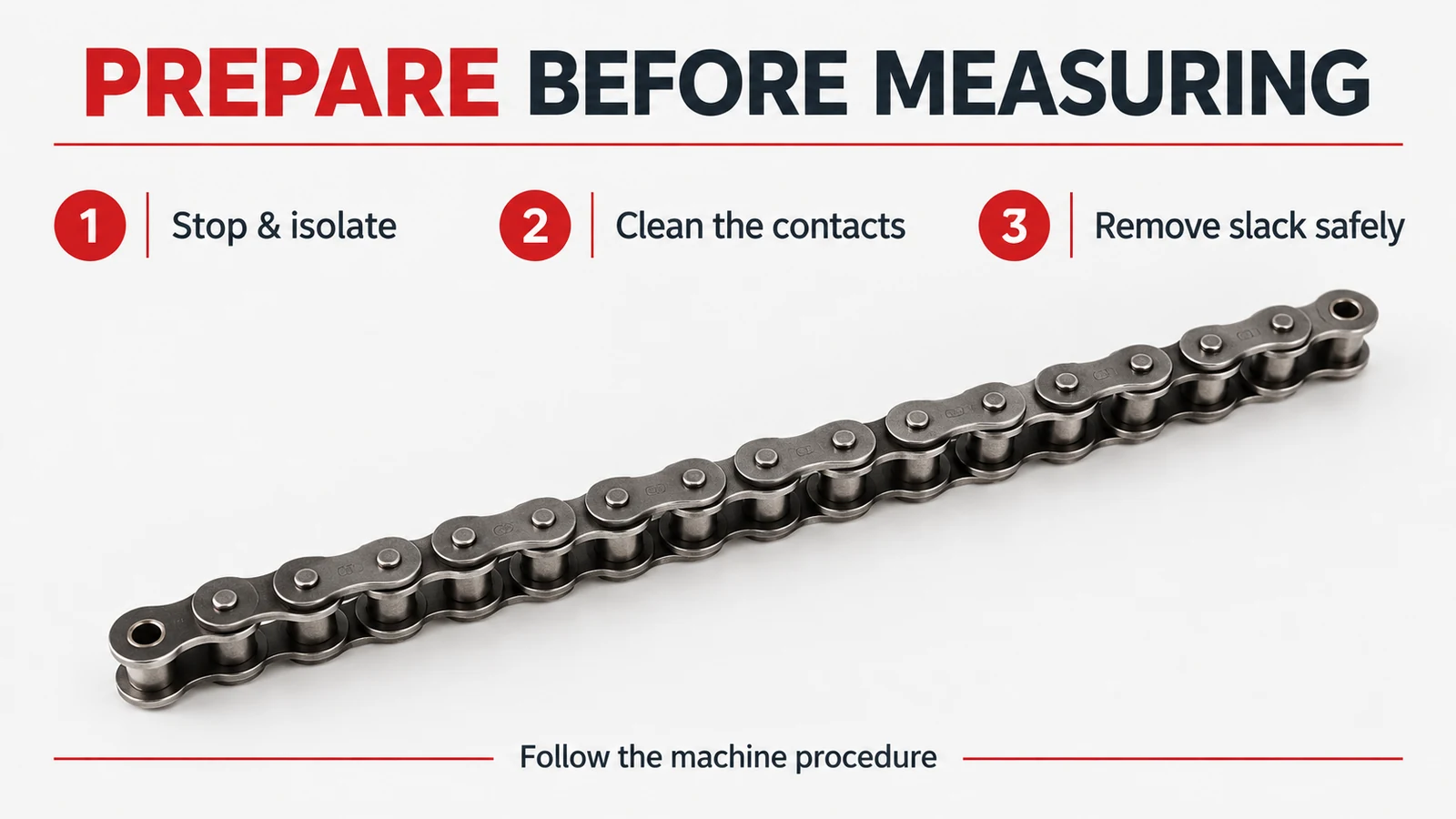
Stop the machine and safely isolate its energy sources according to the equipment procedure. Do not measure a moving chain or run the drive to hold it tight.
Choose an accessible straight section. Remove dirt that prevents the gauge from seating, using the approved cleaning method. Remove slack with the machine maker’s safe tensioning method, enough to take up joint play. The chain must remain stationary. Our installation and maintenance guide provides broader background on alignment, tension and maintenance.
Before measuring, look for cracked plates or rollers, abnormal pins, corrosion and joints that do not bend freely. Suspected damage needs maintenance assessment even if elongation is low. See the discussion of common roller-chain failure causes for the wider condition check.
Where should you place and read the tool?
Follow the selected roller chain wear gauge instructions for contact points, direction and measuring span. Seat it lightly; forcing it into place can invalidate the reading.
A GO-NO GO gauge gives a pass/fail indication against its built-in limit. Another tool may display a scale or colored zones. Read the actual tool legend rather than assuming that a particular color or drop-in position means “replace.” For example, the Tsubaki indicator-kit instructions describe the contacts and color meanings for that kit specifically.
Write down what the tool actually shows. If it provides a threshold indication, record that indication and its stated limit. Do not turn a pass/fail observation into a precise percentage that the tool did not measure.
Repeat the check at several locations, following the machine’s safe procedure for accessing each section. Wear can be uneven. Record the locations and the largest valid reading; an average can hide a more worn section. If the roller chain wear gauge will not seat consistently, resolve compatibility, cleanliness and tension before accepting the result.
How can you verify a reading with measured length?
If the roller chain wear gauge gives an unclear or borderline indication, a maintenance person can check elongation using the chain maker’s dimensional method and suitable measuring equipment.
Tsubaki’s roller-chain inspection guidance describes a caliper method over approximately six to ten pitch intervals. With the chain taut, measure the inside distance, L1, and the outside distance, L2, across the same selected end rollers. Calculate their mean:
Measured span L = (L1 + L2) ÷ 2
Then compare that span with the nominal length:
Original span L0 = nominal pitch × number of pitch intervals
Elongation (%) = [(L − L0) ÷ L0] × 100
Count the gaps between pin centers. Ten pitch intervals run from the first pin center to the eleventh. Do not use an inside-only roller gap as the measured span in this formula.
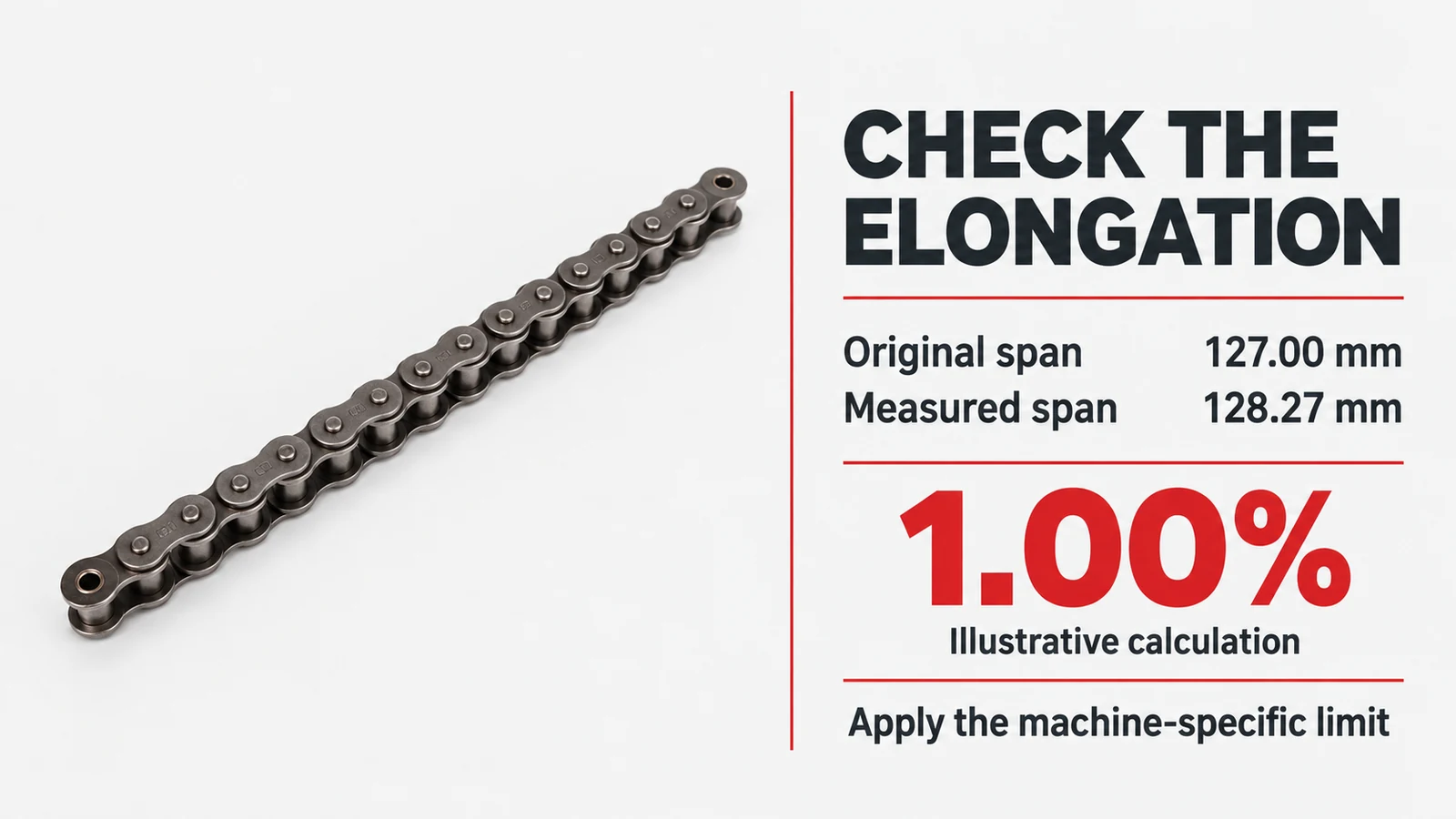
For an illustrative example, take 12.70 mm pitch across ten intervals. The original span is 127.00 mm. If the corrected measured span is 128.27 mm, elongation is:
[(128.27 − 127.00) ÷ 127.00] × 100 = 1.00%
This example explains the calculation. It does not establish whether that chain can remain in service. Compare the percentage with the limit for the actual machine and chain.
Keep the nominal and measured spans in the same units. If the dimensional check disagrees with the gauge, review the selected rollers, interval count and contact method before making a replacement decision.
What result means the chain needs replacing?
Interpret the roller chain wear gauge result against the equipment’s applicable rejection limit. A tool set to a higher threshold cannot confirm acceptance where the machine requires an earlier replacement.
There is no universal 3% replacement rule. For example, Tsubaki’s smooth-transmission guidance gives these limits according to the larger sprocket’s tooth count:
| Teeth on the larger sprocket | Elongation limit in that guidance |
|---|---|
| Up to 60 | 1.5% |
| 61–80 | 1.2% |
| 81–100 | 1.0% |
| 101–110 | 0.8% |
These figures illustrate why application details matter. Use the applicable equipment and chain-maker instructions rather than transferring this table to every drive. A roller chain wear chart is useful only when its chain type, measurement method and limits match the application.
Use the inspection result to agree on the next action:
| Result | Next action |
|---|---|
| Below the applicable limit, with no other identified concern | Record the result and follow the required inspection schedule. |
| Close to the limit or readings disagree | Confirm the method and ask maintenance to set the next check and replacement plan. |
| At or above the applicable limit | Follow the equipment’s replacement requirements. |
| Damage, uncertain chain identity or an unsuitable tool | Resolve the condition or specification issue before relying on the reading. |
For purchasing, keep the inspection result separate from the replacement specification. The drive-chain range identifies product families, but an order still needs the exact series and dimensions.
What should buyers record before ordering replacement chain?
Keep the roller chain wear gauge model, inspection date, measurement locations, results and applicable limit together. Add the chain number, pitch, roller diameter, inner width, strand count, overall length and any attachments or special features. Include photographs and the machine reference where available.
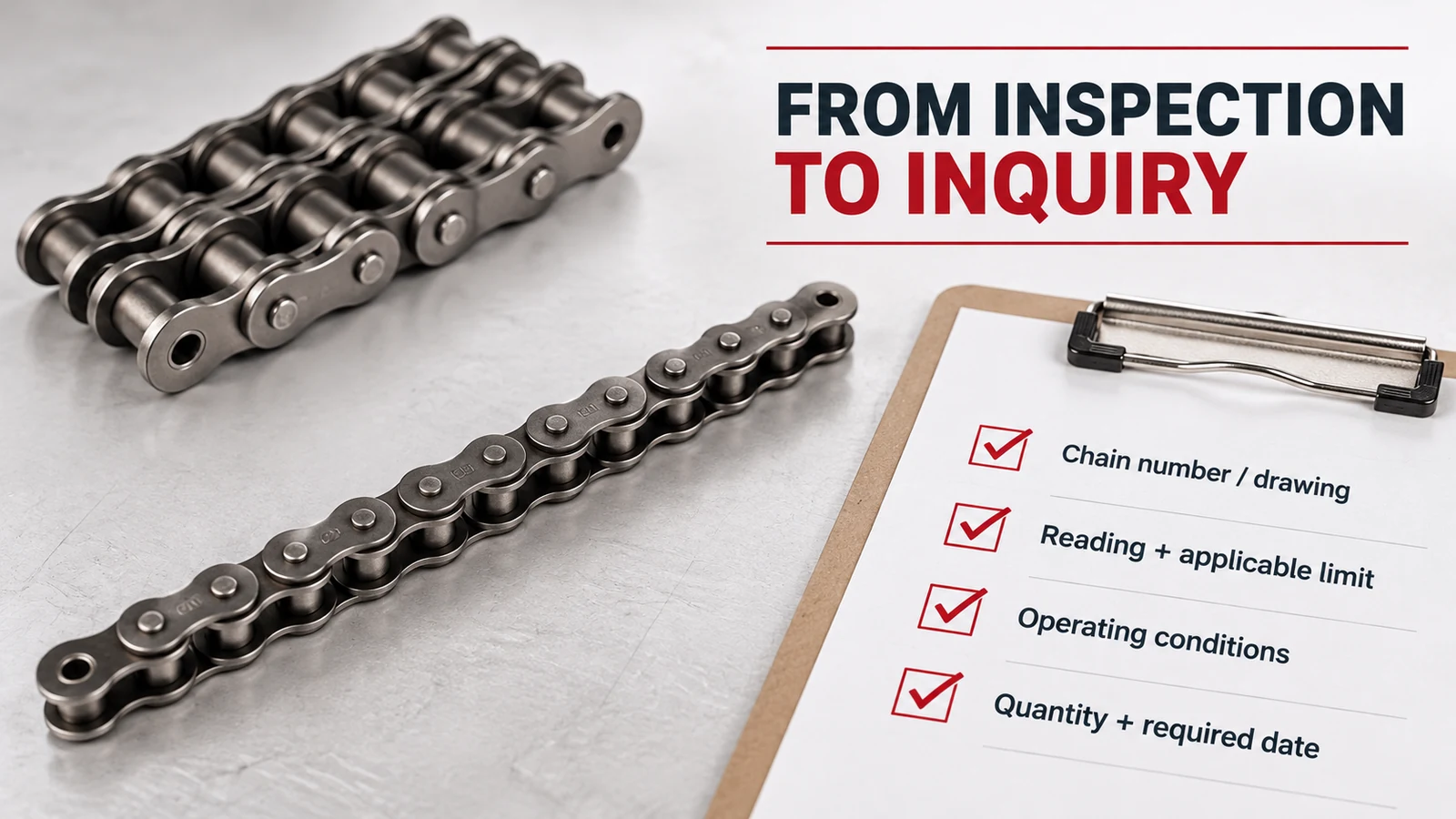
For distributors supporting several machines, keep a separate record for each installation so one customer’s acceptance limit does not become another customer’s specification.
Preserve suffixes and construction details. If the installed chain is an H-series roller chain, for example, include that designation rather than requesting a generic chain of the same pitch. Ask the supplier to confirm the specification against the drawing and operating conditions.
If wear is progressing unexpectedly, review the cause before repeating the order. Our wear and elongation prevention article covers the broader maintenance discussion. The chain lubrication guide helps structure follow-up questions about lubrication access and method.
Where lubrication access is difficult, discuss self-lubricating roller-chain options with the supplier; they still require inspection. For corrosive exposure, ask whether a corrosion-resistant chain suits the actual environment. Neither choice removes the need to confirm load, speed and application fit.
A roller chain wear gauge is useful when the tool fits, the measurement is repeatable and the result is judged against the correct limit. To prepare a replacement inquiry, send Universal Chains your chain number or drawing, inspection record, operating conditions, quantity and required delivery date so the team can review the specification.