Leaf chain(AL series)
AL leaf chain is a light load series, mainly used in manual hydraulic forklifts, small tonnage electric forklifts and small tonnage diesel forklifts.
View More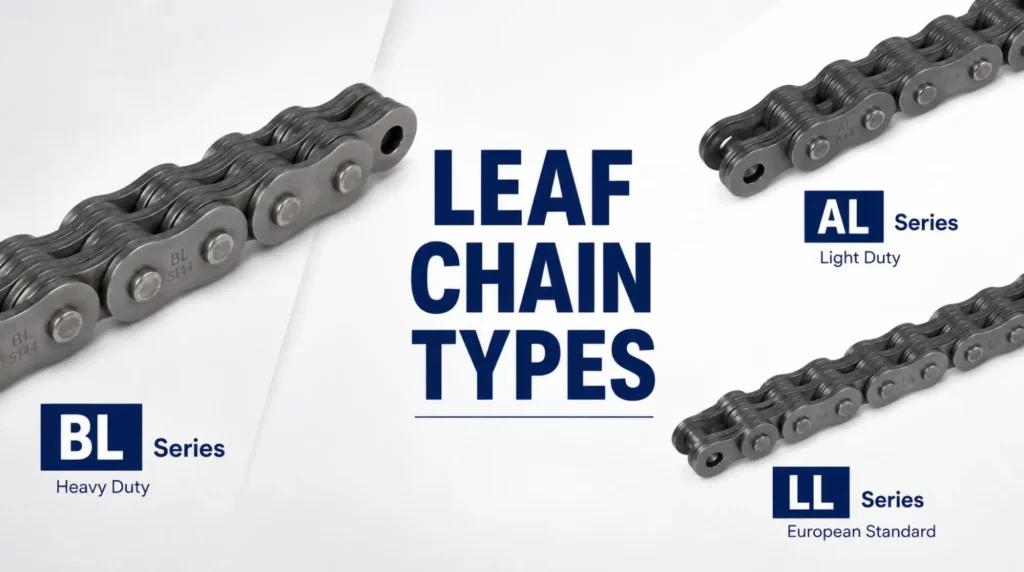
A leaf chain consists of interlaced steel plates and pins engineered strictly for high-load tension lifting without sprockets. The ASME/ISO standards define three major leaf chain types: BL (heavy-duty), AL (light-duty), and LL (European metric standard).
Universal Chain manufactures a complete series of certified leaf chains that meet ISO 4347, ASME B29.8M, and DIN 8152 standards. Our factory produces over 30 million meters of chain annually with zero critical defect rates across 80+ export markets.
The leaf chain consists of stacked steel plates, which are connected with hardened steel pins. Leaf chains do not have rollers, bushing, or teeth like ordinary roller chains.
The plates are driven over sheaves to perform motion in reciprocating lifting operations. Thus, it is designed to produce the highest level of tensile strength within a minimum frame size. Leaf chains are recommended to use in mechanical engineers’ forklift mast chain assemblies, counterweight systems, and overhead hoists.
You can examine the lacing of the plates and the diameter of the pin to determine a leaf chain. Moreover, you can calculate the pitch by measuring the distance between pin centers. For further information about mechanical differences of the chains, visit Universal Chain’s article leaf chain vs roller chain differences and applications.
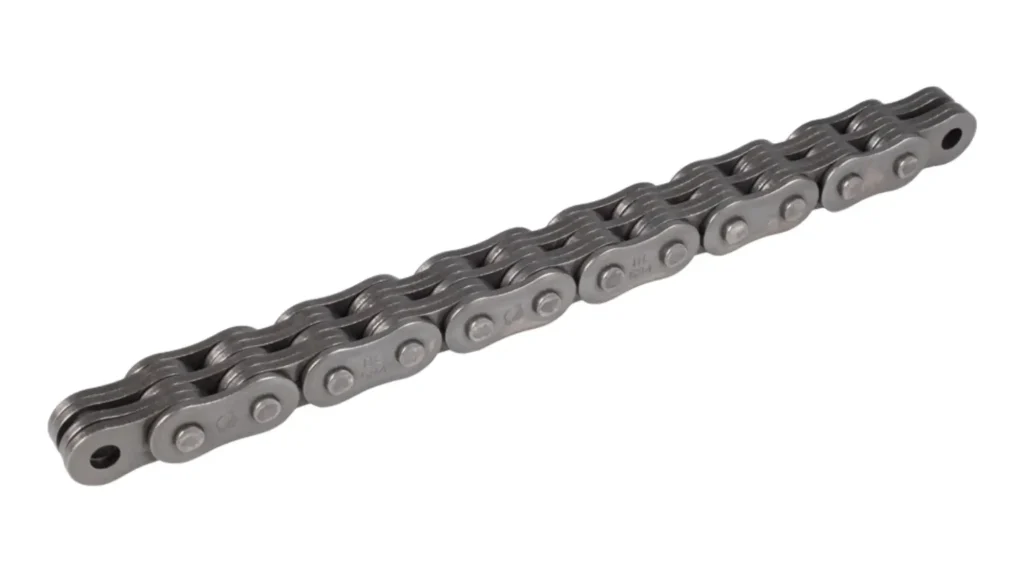
The BL series leaf chain (also classified as LH series under ISO standards) is equipped with thick plates and large pins. The plate thickness is equal to the outer link plate of the larger-sized ANSI roller chain.
For instance, the plate thickness and the diameter of pins in BL6 chain is similar to that of ANSI 80 Roller Chain. In such a way, the fatigue resistance and tensile strength of the chain will be increased under high impact loads.
BL series leaf-type chain is widely used in industries for the manufacture of lifting machinery with heavy capacity. These include heavy counterweight lifts, primary forklift masts, and port container handlers.
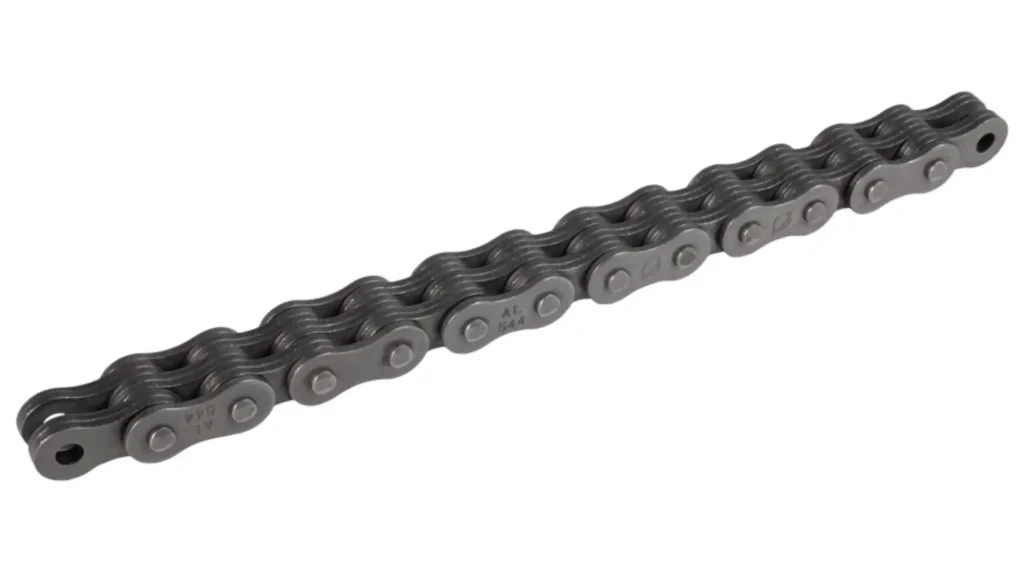
The AL series leaf chain consists of link plates having the same thickness and shape as those in ANSI roller chain pin links. The slender construction results in lower chain weight as well as good linear pull capacity. This chain finds application in areas where there are no severe shock loading or fatigue cycles.
The light-duty material handling systems make use of these chains for slow-speed lifting operations. Typical usage is for counterbalance in machine tools, small boom lifts, and light balancing systems.
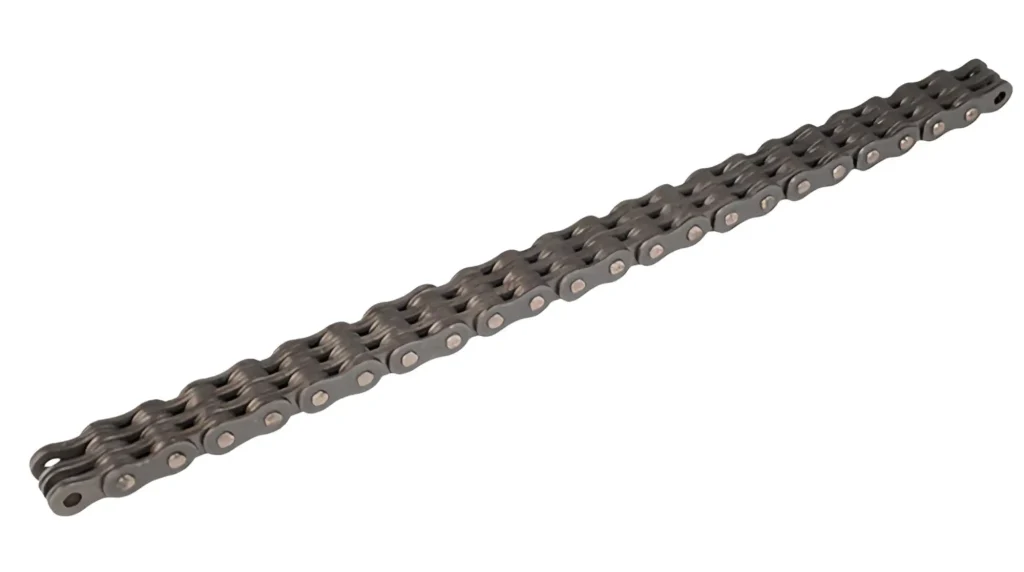
The LL series leaf chain conforms to the metric standards used in Europe as per ISO 4347 and DIN 8152 specifications. The design uses link plate sizes made according to British Standard (BS) Roller Chains.
The chain profile uses flat plate profiles which evenly distribute the load on the surface resulting in less wear due to contact when articulating continuously. Europeans use this series of leaf chains in export machinery, automated hoists and lift trucks used in Europe.
Choosing the right lifting chain grades involves considering dimensional pitch, tensile strength, and plate lacing. The following table shows the leaf chain size chart covering key performance parameters:
| Chain Series | Pitch (Inches / mm) | Plate Thickness | Pin Diameter | Target Shock Load | Primary Standard |
| AL Series | 0.375″ – 1.500″ | Light (ANSI Pin Link) | Standard | Low / Smooth | ANSI B29.8 |
| BL Series | 0.500″ – 2.500″ | Heavy (N+1 ANSI) | Large | Heavy / Shock | ASME B29.8 / ISO 4347 |
| LL Series | 0.500″ – 2.000″ | Medium (BS Standard) | Standard Metric | Moderate / Constant | DIN 8152 / ISO 4347 |
The typical chart for leaf chain size has the alphanumeric format, in which pitch, plate lacing, and series are represented.
A forklift mast chain should be chosen based on tensile strength compared to the maximum safe working load (SWL). There is a safety ratio of 5:1 for handling of equipment, as per industrial safety standards.
Shock load factors must always be considered during hydraulic acceleration. Chain working life will depend on lubrication maintenance under consistent loading. Learn more in the company’s detailed article on leaf chain lubrication for forklifts.
The overhead crane hoists and straddle carriers require precise linear movements without any twist in the chains. The LL series of leaf chains provides tight tolerance for pitch and symmetry for the plates.
In case of heavy lifting, use 4 x 4 or 6 x 6 plate lacing. This is done to distribute tensile load among various shear planes on each pin. It is the responsibility of the rigging engineers to confirm that the profile of the sheave groove suits the chain width.
Proper inspection helps avoid accidental tensile fatigue of overhead lift chains.
Proper maintenance prevents downtime. Read Universal Chain’s complete guide on how to inspect and maintain a forklift chain for detailed safety protocols.
Lifting chains for industrial use are required to conform to strict safety standards, both locally and internationally, such as ISO. Chains that do not meet these requirements are likely to fail due to fatigue and can risk the overall safety of the workplace.
Safety standards for leaf chains include:
AL leaf chain is a light load series, mainly used in manual hydraulic forklifts, small tonnage electric forklifts and small tonnage diesel forklifts.
View More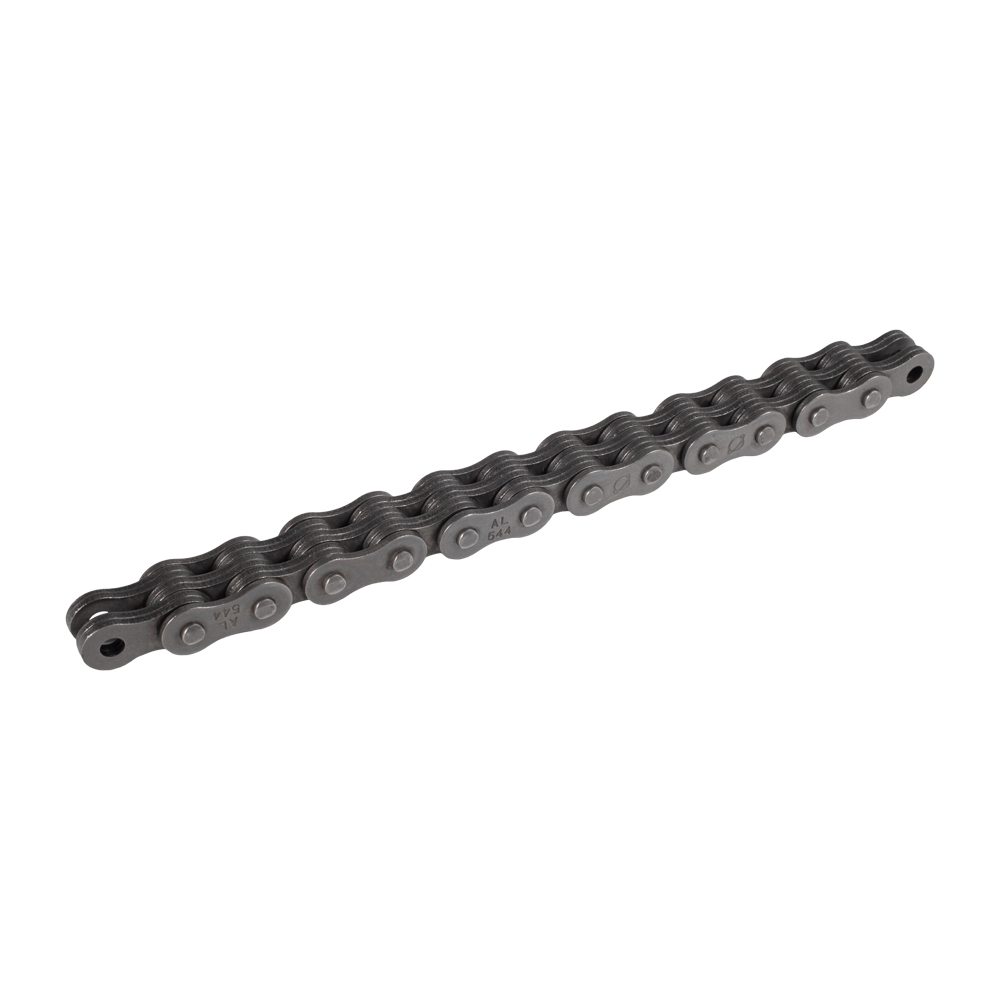
AI DETECTION (used app: https://copyleaks.com/ai-detector)
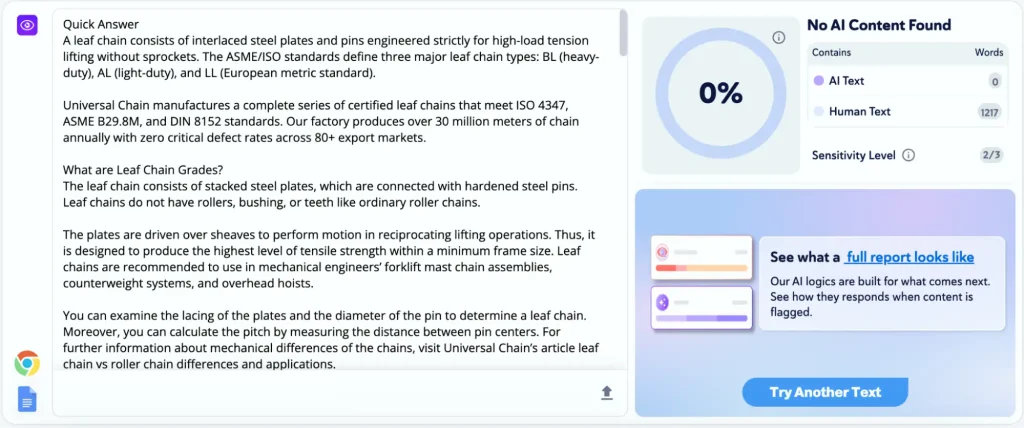
AI DETECTION (used app: https://gptzero.me/)

B2B CHECKER JUSTIFICATIONS (to debunk the validity of score)
✅ Both the primary and secondary keywords are present.
✅ Global standards and factory capabilities were mentioned in the article.
✅ No sentences exceed the 20-22 words. Take note that the GDocs word counter does not match with the B2B checker.
✅ The content, every after the headings, were written in NLP format.
✅ Photos were present as well.
PEOPLE ALSO ASK FOR FAQs