When to Replace Roller Chain and Sprockets Together
Quick Answer: Roller chain sprocket wear may require a chain, sprocket, or pair replacement based on measured condition. What looks like chain stretch is pin-and-bushing wear; damage in either part can accelerate wear in the other. Measure a straight, taut span against the equipment or chain maker’s applicable limit, then inspect both sprockets. No universal percentage settles every drive. Universal Chains offers a broad roller-chain range and selection support for family, dimensions and operating details before quotation.
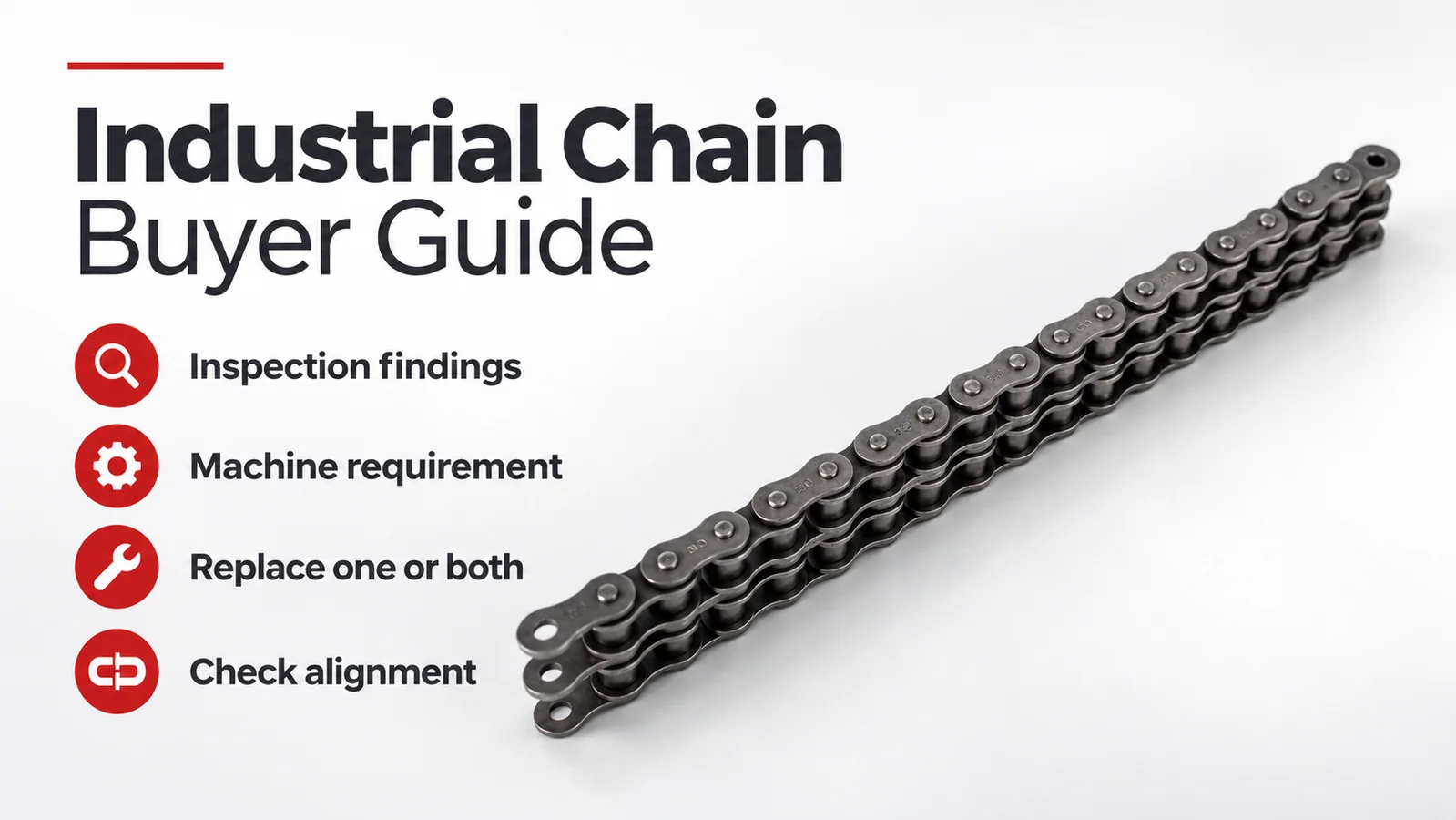
Record chain size, measured wear, tooth condition and likely cause. Those four findings determine what belongs in the next maintenance or purchasing decision.
How do chain wear and sprocket tooth wear interact?
Roller-chain pitch is the distance between adjacent pin centers. During operation, each joint bends as it enters and leaves a sprocket. That repeated movement wears the pins and bushings. The permanent increase called stretch comes from material removal at these joints. Universal’s explanation of roller-chain components shows where the parts meet.
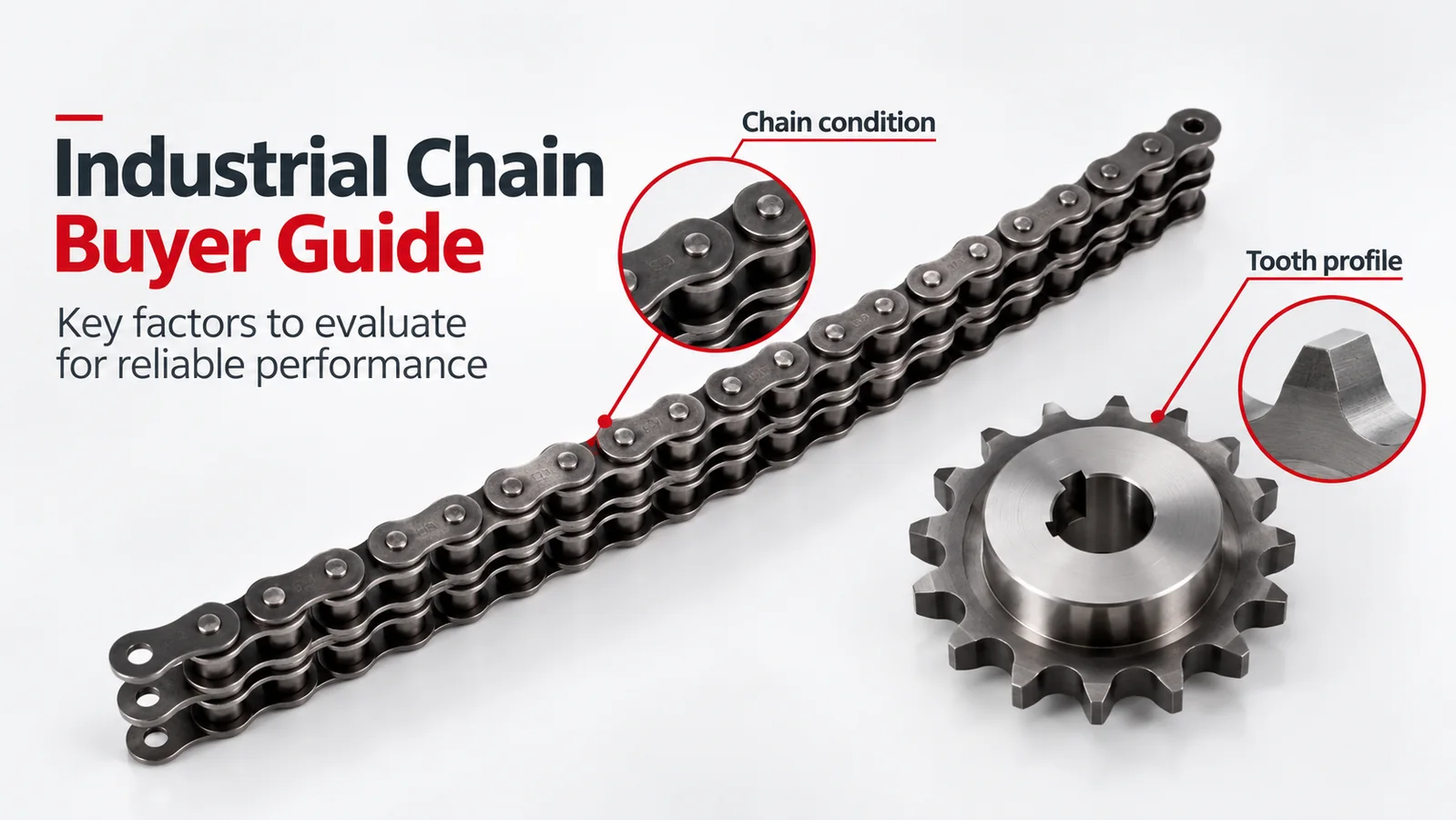
As a chain lengthens, its rollers may ride higher on the sprocket teeth. A worn tooth profile also changes engagement. Each condition can make the other worse: damaged teeth work the chain harder, while a chain that no longer seats correctly continues damaging the teeth.
That relationship calls for inspecting the pair, not automatically replacing both. Universal’s guide to preventing roller-chain wear and elongation identifies lubrication, alignment, load and environment as conditions to investigate. Its power-drive roller-chain guide connects sprocket inspection with chain replacement.
Separate ordinary wear from sudden failure. A cracked plate, broken roller, missing pin retention, severe corrosion or bad alignment needs its own diagnosis. Current equipment instructions still control the final decision.
What are the visible signs of roller chain sprocket wear?
Inspect both sprockets from the drive and return sides. Look for teeth that are visibly thinner or rounded, a hooked profile, uneven polishing, chips, cracks, deep grooves or pitting. Check whether the chain sits high, climbs the teeth or contacts only part of the intended surface.
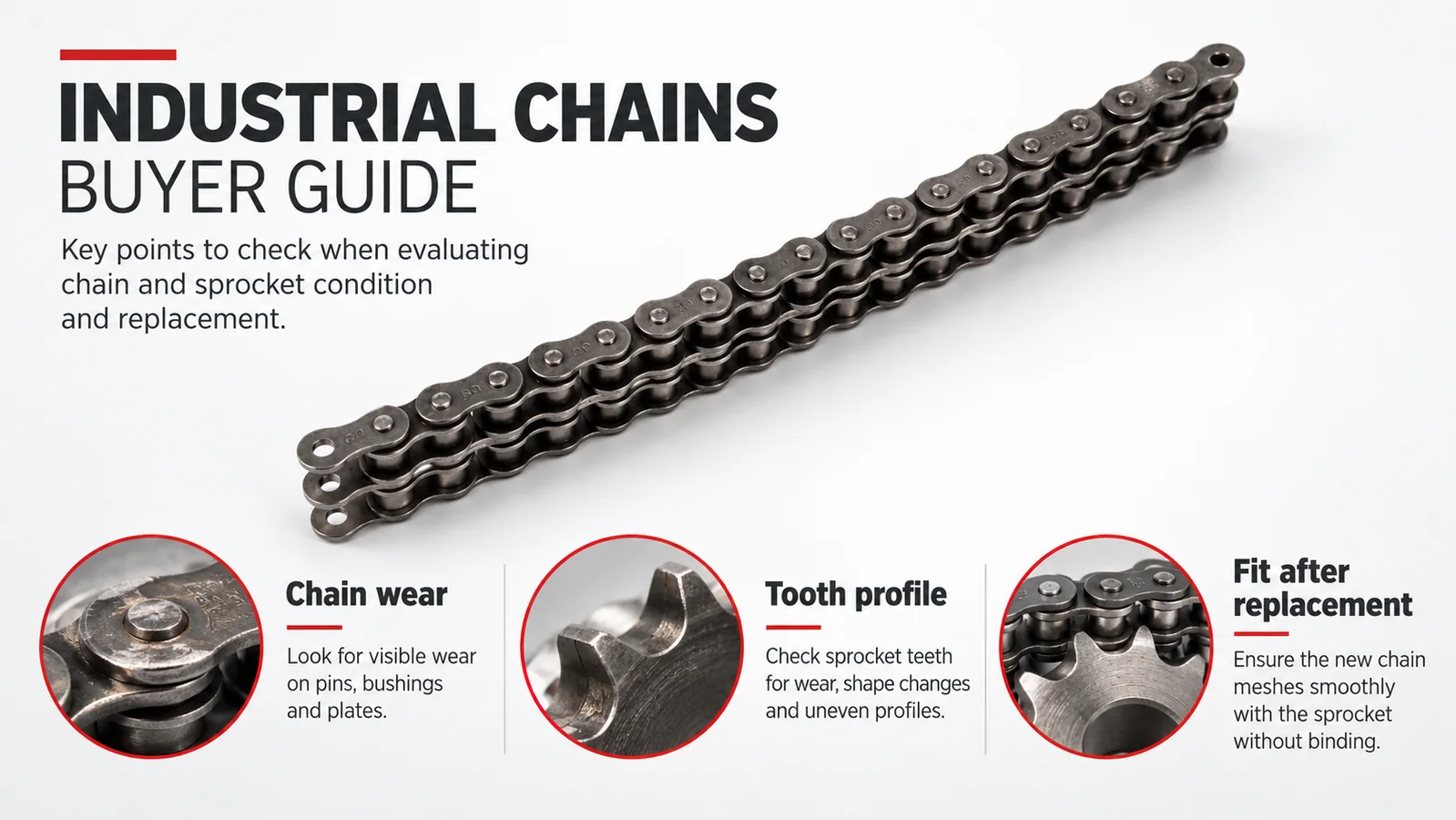
Noise and vibration can support the inspection but do not identify the worn part. A loose or tight chain, poor alignment, damaged bearing or missing lubricant can produce similar symptoms. Follow Universal’s installation and maintenance checks for alignment, tooth-flank wear, tension and joining hardware.
EquipmentShare’s guide to sprocket wear in heavy machinery describes tooth thinning and rounding, chipped teeth, poor seating and reciprocal chain wear. Its examples come from heavy equipment, so use them as inspection principles rather than as a tooth-profile limit for every roller-chain drive.
Use the machine maker’s diagram, replacement criteria or service procedure first. If the profile looks damaged but has no numeric criterion, ask maintenance or the OEM to judge the geometry instead of estimating a limit from a photograph. A roller-chain accessories guide explains wear gauges, sprockets, tensioners and alignment tools, while the failure-cause guide helps record cracks, binding or unexplained damage.
How should you measure chain wear and inspect the sprockets?
Use the equipment’s lockout procedure and stop all relevant energy sources. Keep a repeatable roller chain sprocket wear record:
- Identify the nominal size from the machine record, marking or drawing. Do not call a worn measurement the original pitch. Universal’s chain measurement guide covers pitch, roller dimensions and straight sections.
- Choose a gauge for the chain construction and confirm its supported size with the roller-chain size chart. Record pitch, roller diameter, inner width and pin details from the ANSI dimensions guide; use the maker’s drawing for the final specification.
- Select a straight span and make it taut by the approved method. Follow the gauge’s contact points, pitch count and reading instructions. Diamond Chain’s wear-gauge instructions, distributed by IBT, explain the effect of slack and span.
- Record the gauge scale and largest valid result at several positions. Uneven readings may indicate uneven wear or alignment.
- Inspect both sprockets, alignment, tension, lubrication, guides, bearings and joining links.
- Compare the results with the maker, chain maker, gauge instructions or maintenance standard for the exact drive.
The Diamond instructions include two wear scales, each specific to that document and its stated sprocket and application assumptions. They do not establish one percentage for every roller-chain drive.
Keep the gauge model or scale name beside each reading. Diamond’s instructions tie both to a defined contact and span procedure, so a repeat inspection should use a consistent documented method.
When should you replace the chain, the sprockets, or both?
Use the chain measurement and sprocket condition together. This roller chain sprocket wear matrix is practical guidance, not a universal policy.
| What the inspection shows | Sensible next action |
|---|---|
| Chain remains within its applicable limit; both sprockets show even contact and no profile damage | Keep the pair under observation and correct any lubrication, tension or alignment issue. Replace only a failed component if the evidence supports that action. |
| Chain remains within its limit; one or both sprockets show hooking, unequal wear or profile damage | Plan sprocket replacement if the equipment or competent maintenance assessment supports reuse of the chain. Verify chain engagement before return to service; replace both if that engagement is uncertain. |
| Chain has reached its applicable limit; sprocket teeth show profile loss, hooking, uneven contact or damage | Replace both. Fitting a new chain to an unverified worn profile risks repeat wear. |
| Chain has run beyond its limit for an unknown period or its seating is already abnormal | Inspect the complete drive before buying a chain. Replace both unless the sprocket profile and engagement are positively confirmed as serviceable. |
| Damage followed misalignment, overload, contamination, poor lubrication or binding | Correct the cause first. New parts do not repair the condition that damaged the old pair. |
Do not connect a short new section to a badly worn chain; a pitch mismatch can alter engagement. Universal’s older replacement overview supplies background, but current maker or OEM criteria govern.
If the decision remains borderline, use Universal’s precision roller-chain category to identify the likely chain family while keeping the measurement, sprocket condition and operating duty open for review.
What should purchasing confirm before ordering?
Turn the roller chain sprocket wear findings into one specification package. For the chain, give every supplier the standard and series, chain number, nominal pitch, roller diameter, inner width, pin details, strand count, number of links or length, joining hardware and any attachment or coating requirement. Use a drawing or gauge to settle dimensions.
For the sprockets, include the tooth counts, drawings or photographs showing the profile, bore, keyway or fixing method, material, quantity and any observed tooth wear. Do not assume that “same pitch” makes a sprocket interchangeable. Confirm the complete geometry with the chain proposal.
Similar-looking short-pitch chains can belong to different product series. Review the A-series roller chains and B-series roller chains as distinct specifications and preserve the original markings. If the current chain is unidentified, use the roller-chain selection guide to collect the drive conditions before comparing offers.
Also state speed, working load, starts and stops, shock or jam conditions, lubricant exposure, temperature, moisture, dust and maintenance access. Ask the supplier to confirm the series, dimensions and connecting parts for the complete replacement package.
How can you prevent repeat roller chain sprocket wear?
Correct the conditions that increase joint wear or disturb tooth contact. Check shaft alignment and sprocket plane, set tension by the approved method, maintain the specified lubrication and remove debris that blocks normal seating.
Where maintenance access is constrained, discuss Universal’s self-lubricating roller-chain option with the supplier. Confirm its load, speed and duty fit; it does not correct misalignment or a worn sprocket. A standard-versus-heavy-series comparison can explore a duty mismatch, but a stronger chain should not mask a geometry or maintenance fault.
Should you ask Universal Chains to review the pair?
When roller chain sprocket wear requires a replacement quote, send the machine reference, chain number or drawing, dimensions, sprocket details, inspection photographs, quantity and operating conditions. Universal can help route the inquiry through its drive-chain families and assess the specification information; model and sprocket compatibility still need confirmation. Use the contact page and state which observed condition is driving the request.